
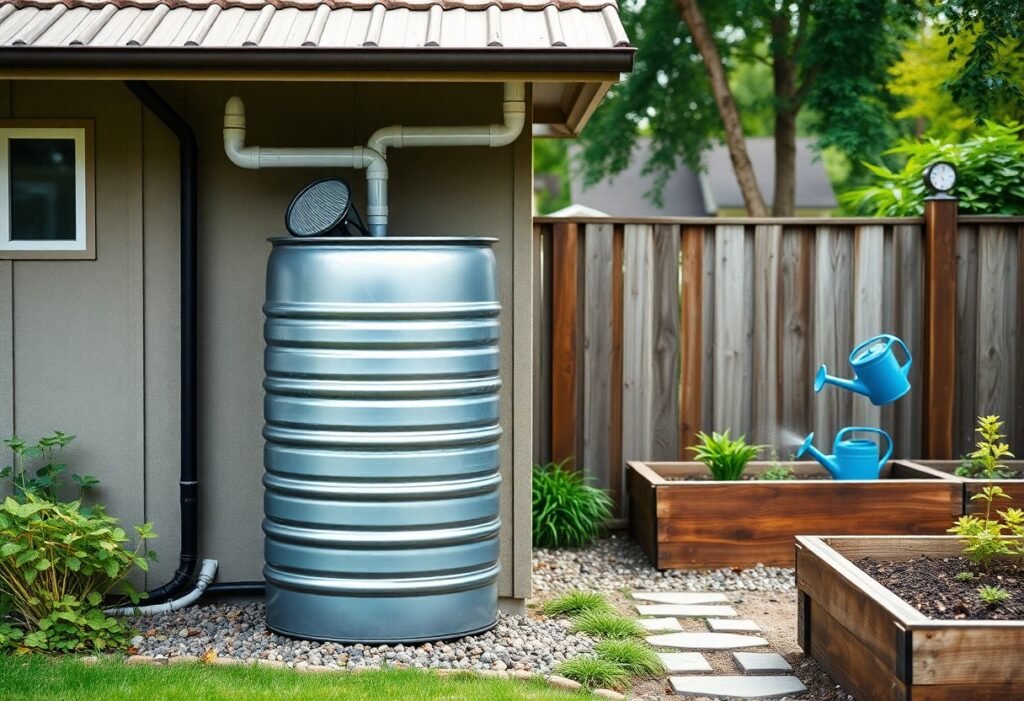
Most backyard gardeners overlook the resource pouring from their rooftops each time it rains. You can capture hundreds of gallons annually using simple systems that reduce reliance on municipal water. This method supports plant health and conserves resources, aligning with sustainable practices used by eco-conscious growers across diverse climates.
The Sky’s Bounty
Every rainfall offers a chance to replenish your garden’s water supply without drawing from municipal sources. You can capture hundreds of gallons from a single storm, simply by directing roof runoff into storage. A mid-sized SaaS firm might track data flow, but you’re tracking something more elemental-water moving from shingles to soil.
Roof area and local precipitation patterns determine how much you can realistically collect. A 1,000-square-foot roof may yield over 600 gallons from just one inch of rain. You don’t need perfect weather forecasting to benefit-consistent light rains in spring or fall often provide steady input for early plantings.
Simple Capture Vessels
Placing a barrel beneath a downspout is the most straightforward way to begin collecting rainwater. A single 55-gallon drum can supply enough moisture for a small vegetable patch through a dry week, reducing reliance on municipal systems. Use a fine mesh screen to keep debris and mosquitoes out while allowing water to flow freely into the container.
For broader coverage, link multiple vessels with overflow hoses so excess water moves automatically to adjacent tanks. A mid-sized SaaS firm retrofitting its campus garden used three connected 80-gallon bins to capture rooftop runoff, supplying 90% of their landscape needs during spring months. Position each vessel on a slight incline to improve drainage and access.
Gravity and Flow
Positioning your rain barrel at a higher elevation than your garden beds allows water to move naturally through a hose or drip line without pumps. Even a modest height difference of 18 inches generates enough pressure to sustain steady flow for root-level irrigation. You can use stacked cinder blocks or a treated wood platform to safely elevate a full barrel.
Water exits the barrel through a spigot near the base, where velocity depends on how full the container is and the outlet’s diameter. Opening the valve fully during dry spells delivers a stronger stream for deep soaking, while a slow drip over several hours benefits seedlings and shallow-rooted herbs. A hose with pinhole leaks buried under mulch mimics natural groundwater rise.
Maintenance of the Reservoir
Inspect your storage tank every few weeks to ensure the inlet filter remains free of leaves, debris, and sediment buildup. A clogged filter reduces water flow and can introduce organic matter that promotes algae growth inside the reservoir. Clean the screen with a soft brush and rinse it under running water, preferably before the start of each growing season.
Drain and scrub the interior of the tank at least once a year to remove biofilm or mineral deposits, especially if you notice an odor or discoloration. A mid-sized SaaS firm might prioritize server maintenance, but your rainwater tank demands similar routine care to function reliably. Use a mixture of white vinegar and water for safe, effective cleaning without harsh chemicals.
Integration with the Soil
Encouraging Deep Root Development
Water absorbed slowly into the ground encourages plant roots to grow deeper, accessing nutrients and moisture beyond the surface layer. When you direct harvested rainwater into basins or swales near shrubs and trees, the soil acts as a living filter and storage medium. A mid-sized SaaS firm might rely on cloud infrastructure, but your garden relies on this natural infiltration to sustain growth during dry spells.
Building Organic Matter Over Time
Consistent use of rainwater supports microbial activity that breaks down compost and mulch into rich humus. Unlike treated municipal water, rain lacks chlorine and other chemicals that can inhibit soil biology. Over several growing seasons, this results in darker, crumbly soil that retains moisture more effectively, reducing the frequency of supplemental watering even in summer heat.
Ethical Stewardship
You honor the natural water cycle by capturing rainfall close to where it lands, reducing runoff that can erode soil and carry pollutants into local waterways. This practice reflects a commitment to using only what you need, minimizing strain on municipal systems and aquifers, especially during dry periods. A mid-sized SaaS firm might prioritize data efficiency, but in your garden, restraint in water use demonstrates equal responsibility.
Sharing excess harvested water with neighbors during droughts strengthens community resilience and models sustainable behavior. Installing clear signage about your system invites curiosity and opens conversations about conservation. Your garden becomes not just a source of food, but a quiet advocate for mindful resource use.
Final Words
You now have the foundational knowledge to begin harvesting rainwater in your backyard garden. A single downspout connected to a 50-gallon barrel can collect enough water to sustain vegetable beds through dry weeks, reducing reliance on municipal supplies. Over time, consistent use of harvested rain supports healthier soil biology, as the absence of chlorine and fluoride benefits microbial activity.
Your system can expand as your needs grow, incorporating multiple barrels or buried cisterns for seasonal storage. A mid-sized SaaS firm may prioritize data infrastructure, but your priority is tangible: nurturing living soil with sky-fed water. Every gallon captured is a step toward resilience, closing the loop between rainfall, roots, and harvest.