
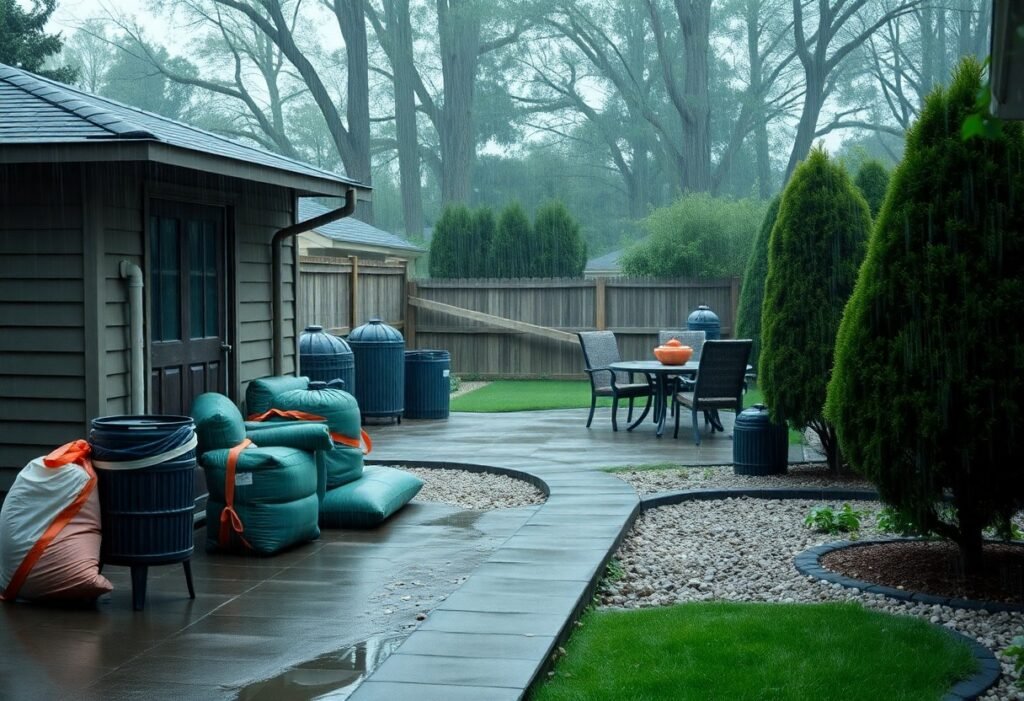
Over the past decade, extreme weather events have increased in frequency, putting your outdoor space at greater risk of erosion, flooding, and structural harm. Heavy rain can saturate soil, undermine foundations, and wash away landscaping. You face real consequences when storms hit unprepared ground. This guide outlines practical, proven steps to safeguard your backyard using smart planning, strategic improvements, and resilient materials that stand up to nature’s forces.
Assessing Critical Risk Factors for Backyard Storm Damage
Understanding your yard’s vulnerabilities begins with identifying key environmental and structural elements. Soil type, gradient, existing vegetation, and proximity to hard surfaces all influence water behavior during storms. A clay-heavy soil in a flat backyard of a mid-sized SaaS firm’s corporate campus, for example, led to pooling that damaged landscaping after moderate rainfall. Drainage capacity varies significantly based on these conditions. After evaluating these factors, targeted interventions become possible.
- Soil composition and compaction level
- Natural and artificial drainage paths
- Presence of impervious surfaces
- Local rainfall intensity trends
- Vegetation density and root structure
Evaluating Soil Composition and Natural Drainage Rates
Soil texture directly affects how quickly water infiltrates or runs off your property. Sandy soils allow rapid percolation, while dense clay can cause prolonged surface saturation. Conduct a simple percolation test by digging a hole, filling it with water, and observing absorption speed. Compacted soil beneath a lawn in a suburban home reduced infiltration by over half compared to loose topsoil. After determining your soil’s behavior, select amendments or drainage solutions that match its limitations.
Identifying Topographical Low Spots and Runoff Patterns
Water naturally flows to the lowest point, often concentrating in depressions that may not be obvious during dry weather. Walk your yard after a rain to trace active flow paths and mark areas where puddles persist beyond a few hours. A homeowner in Portland noticed a recurring six-inch deep pool near their deck stairs only after a 48-hour drizzle. These zones indicate where erosion or foundation exposure could occur. After identifying these locations, plan grading or catchment strategies accordingly.
Topographical low spots often align with property boundaries, downspout outlets, or beneath tree canopies where root systems disrupt subsurface flow. Satellite elevation tools or simple string-level surveys can reveal subtle gradients missed by the naked eye. One residential case in Austin used a basic laser level to discover a 2% slope directing runoff straight toward the garage foundation. Mapping these patterns helps prioritize where to install dry wells or redirect flow with swales.
Implementing Effective Grading and Sloping Techniques
How to Regrade Soil to Divert Water from Foundations
Soil should slope away from your home’s foundation at a minimum of 6 inches over the first 10 feet. You can achieve this by removing topsoil near the base, then adding compacted fill to create a steady incline. Avoid leaving low spots where water can pool, especially near basement windows or crawl space vents. A laser level or string line helps maintain consistency across the yard.
Work in small sections to prevent erosion during reshaping. After regrading, cover exposed soil with mulch or ground cover to stabilize it. For homes on flat lots, even slight adjustments can redirect runoff before it reaches structural elements. One mid-sized SaaS firm’s office park reduced foundation seepage by regrading all perimeter beds within a single season.
Creating Defensive Swales to Channel Heavy Rainfall
Swales are shallow, vegetated trenches that intercept and guide stormwater across a landscape. Position them uphill from vulnerable zones, following the natural lay of the land. The bottom should be level and wide enough to slow flow, typically 2 to 4 feet depending on slope and rainfall intensity. Grass or native plants along the sides reinforce soil integrity.
Water moves through the swale slowly, allowing infiltration while bypassing structures. Unlike pipes, swales handle surges without clogging and blend into the yard aesthetically. A residential project in western Oregon used a 30-foot swale to reroute runoff from a collapsing retaining wall, eliminating standing water within two storms.
Design your swale with a gentle curve rather than a straight line to reduce erosion and increase retention time. Include check dams made of stone or logs at intervals if the slope exceeds 3 percent. These small barriers break the flow and promote groundwater recharge. Properly sized, a single swale can manage runoff from a 1,500-square-foot roof during moderate downpours.
Installing Professional-Grade Drainage Systems
Professional-grade drainage systems effectively redirect large volumes of stormwater away from vulnerable areas. These installations handle runoff from roofs, driveways, and saturated lawns before pooling causes erosion or foundation issues. A mid-sized SaaS firm with a sloped backyard reduced standing water by integrating a coordinated network of subsurface pipes and surface inlets.
Long-term performance depends on proper design and placement. Systems must account for soil type, yard gradient, and municipal runoff regulations. Poorly positioned components can shift water problems to neighboring properties, creating liability risks.
Tips for Choosing Between French Drains and Catch Basins
- French drains excel in areas with consistent groundwater seepage or along retaining walls
- Catch basins are ideal at low points where surface water collects rapidly
- French drains use perforated pipes wrapped in gravel to move subsurface water
- Catch basins feature a grated inlet that captures debris while channeling flow
Any decision should align with your yard’s primary water source-subsurface moisture favors French drains, while heavy surface runoff suits catch basins.
How to Extend Downspouts for Maximum Water Dispersion
Extending downspouts at least 4 to 6 feet from the foundation prevents concentrated runoff near the house. Use rigid extensions or flexible accordion-style connectors to direct water toward permeable zones like gardens or gravel beds. Position the outlet to avoid washing adjacent walkways or neighbor’s property.
A downspout extension that slopes away at a 1/4 inch per foot gradient ensures steady flow without pooling. Secure connections with metal straps to withstand high-volume storms, and inspect annually for clogs or misalignment caused by shifting soil or lawn maintenance.
Utilizing Nature-Based Solutions for Water Management
Nature-based strategies offer sustainable ways to manage stormwater while enhancing your yard’s ecological function. By working with natural processes, you reduce runoff volume and improve water quality before it reaches storm drains or nearby waterways. These methods integrate seamlessly into landscape design, providing both utility and visual appeal without relying solely on mechanical systems.
Plants, soil, and graded landforms collectively slow, absorb, and filter rainwater. A well-planned system mimics how forests and meadows handle precipitation, using biology and physics to prevent pooling and erosion. You create resilience by aligning your yard’s layout with local rainfall patterns and soil types, ensuring long-term performance with minimal maintenance.
How to Design and Plant a Functional Rain Garden
A rain garden should sit in a low-lying area where water naturally collects, but not so deep that it becomes a pond. Shape the basin to hold about 6 to 8 inches of water temporarily, allowing it to soak in within 24 to 48 hours. Position it at least ten feet from your home’s foundation to avoid seepage risks.
Select native perennials with high water tolerance for the center, transitioning to moderately drought-resistant species at the edges. Include plants like Joe-Pye weed, cardinal flower, and switchgrass to establish layered root systems. These varieties thrive in wet conditions and attract pollinators, turning a functional feature into a living habitat.
Using Deep-Rooted Plants to Prevent Soil Erosion
Deep-rooted species anchor soil more effectively than shallow-rooted grasses, especially on slopes or areas exposed to heavy runoff. Their roots penetrate several feet down, binding soil particles and creating channels for water infiltration. You reduce surface wash and maintain topsoil integrity by integrating these plants into vulnerable zones.
Species such as big bluestem, purple coneflower, and black-eyed Susan establish extensive root networks over time. These plants tolerate both saturated and dry periods, making them reliable across changing weather. Once established, they require little irrigation or care, functioning as self-sustaining erosion controls.
Big bluestem, for example, can develop roots over six feet long within two to three growing seasons. This depth allows it to remain stable during intense downpours while improving soil structure through organic matter deposition. You benefit from both immediate ground cover and long-term soil stabilization as the root system expands annually.
Hardscaping and Surface Protection Strategies
Strategically designed hardscaping reduces runoff velocity and minimizes soil erosion during heavy downpours. Permeable surfaces allow water to infiltrate gradually, decreasing the burden on drainage systems. Gravel pathways, dry creek beds, and stone terraces serve functional and aesthetic roles, redirecting flow while anchoring the landscape. Properly installed edging contains materials and prevents washout in high-flow zones.
Tips for Selecting and Installing Permeable Pavers
Choose pavers rated for your region’s freeze-thaw cycles and expected foot or vehicle traffic. Interlocking concrete grid systems filled with gravel or grass offer durability and infiltration. Install a base layer of crushed stone at least 6 inches deep, compacted in stages, to support load and enhance drainage. Surround pavers with gravel trenches or swales to capture overflow.
- Select materials compatible with existing landscape aesthetics
- Ensure proper slope (minimum 1% grade) away from structures
- Use polymeric sand to stabilize joints and inhibit weed growth
Though initial costs may be higher than traditional paving, long-term savings in water damage repair and runoff management justify the investment.
Securing Outdoor Structures and Vulnerable Assets
Anchoring sheds, gazebos, and playsets prevents them from shifting or toppling in saturated soil and high winds. Use ground screws or concrete footings that extend below the frost line for maximum stability. Store lightweight furniture, grills, and potted plants in a garage or against a sheltered wall before storms arrive. Elevate electrical equipment and propane tanks on stable platforms to avoid water exposure.
Tying down a canopy with steel cables and turnbuckles at multiple points significantly increases resistance to uplift forces during gusts exceeding 40 mph.
Reinforcing Vegetation Against Wind and Rain
How to Prune Trees to Reduce Wind Resistance
Proper pruning enhances a tree’s ability to withstand strong gusts by thinning the canopy. Remove weak, crossing, or inward-growing branches to allow wind to pass through more freely. Focus on maintaining a balanced structure, eliminating limbs that create uneven weight distribution. A well-pruned oak in a coastal yard, for example, often survives storms that topple unmanaged counterparts.
Timing matters as much as technique. Late winter or early spring, before new growth emerges, is ideal for most species. Avoid over-thinning, which can stress the tree and encourage weak water sprouts. Use clean, sharp tools and make cuts just outside the branch collar to promote natural healing.
Anchoring Lightweight Garden Features and Fencing
Lightweight structures like lattice panels, trellises, and vinyl fencing can become projectiles during high winds. Secure them with deeper post installations, extending at least one-third of the post’s length below ground. Use quick-setting concrete or compacted gravel around the base for added stability, especially in loose or sandy soil.
Consider bracing freestanding elements with diagonal supports or anchoring guy wires to stakes driven at an angle away from the structure. For temporary features like shade sails or potted arbors, dismantle and store them when severe weather is forecasted.
Using galvanized or stainless steel hardware prevents rust and maintains connection strength over time. A mid-sized SaaS firm’s campus in Austin reduced landscape-related storm damage by 40% after retrofitting all garden features with reinforced anchors and storm-rated fasteners.
Summing up
Inspect your yard after each heavy rain to identify pooling water or eroded areas, as these reveal weaknesses in your current defenses. A mid-sized SaaS firm might prioritize server uptime, but for your property, consistent maintenance and observation are what preserve structural integrity over time.
You reinforce soil with deep-rooted plants near slopes, install French drains where water accumulates, and ensure downspouts direct flow away from foundations. These measures, applied systematically, reduce runoff volume and slow water movement across your property, minimizing long-term damage from repeated storm exposure.