
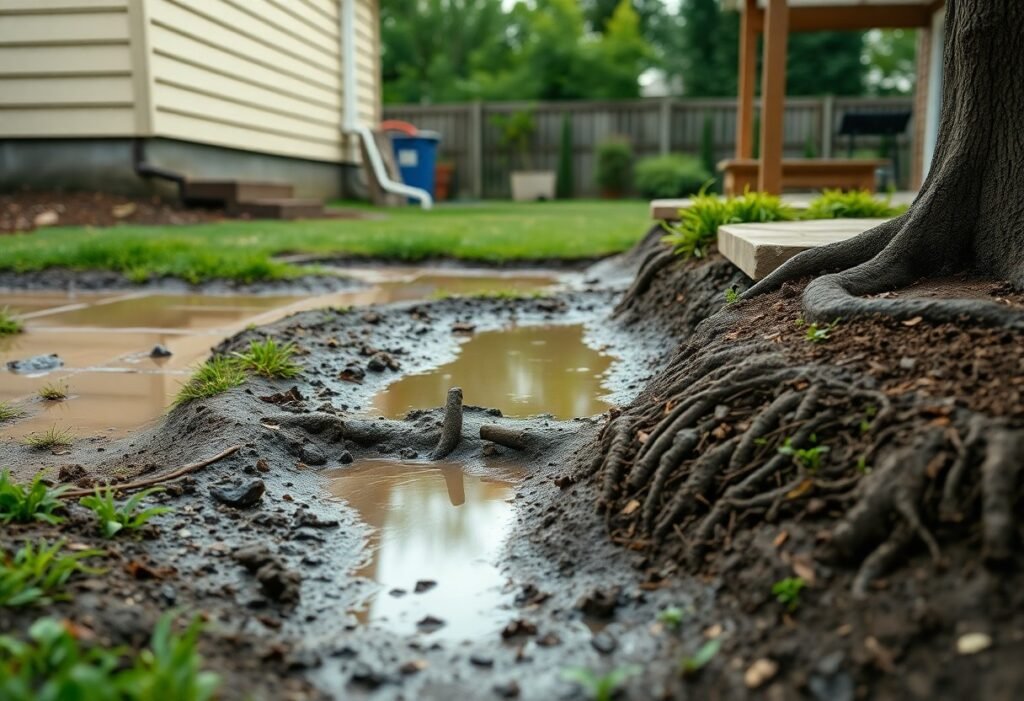
Many homeowners overlook subtle signs that water is not moving properly across their yard, until puddles linger for days or plants begin to fail. You may notice soggy patches after rain, eroded soil, or even cracks near your home’s foundation. These are early warnings that your landscape is struggling with excess moisture. Addressing drainage promptly protects your property’s structure, supports healthy plant life, and prevents long-term damage that can reduce outdoor usability and curb appeal.
The Lingering Deluge
Water pooling in the same spot for hours after rain signals poor surface drainage. If you’re still stepping through puddles a full day later, the soil isn’t absorbing properly and may be compacted or sloped incorrectly. A mid-sized SaaS firm repurposing a suburban home office noticed persistent standing water near their outdoor HVAC unit, leading to rust and premature system strain.
Extended saturation weakens soil structure and increases hydrostatic pressure against foundations. You might see sediment rings or slimy algae growth on hardscapes, clear markers of stagnant water. In one case, a homeowner in Portland discovered that a soggy corner of their yard had eroded a trench toward the garage slab after just two wet seasons.
Structural Integrity and Dampness
Water pooling near your foundation can seep into concrete over time, leading to cracks and shifting in the structure beneath your home. A basement that feels damp or develops musty odors often signals prolonged moisture exposure, which compromises indoor air quality and building materials. Even minor leaks, if left unchecked, may result in warped floor joists or degraded insulation.
One mid-sized SaaS firm converted its office basement into a server room without addressing existing drainage issues, only to face costly mold remediation within two years. Persistent dampness corrodes metal fasteners in wooden supports and encourages rot, diminishing load-bearing capacity. Homes built on clay-heavy soil are especially prone to hydrostatic pressure buildup, which can bow basement walls inward by measurable inches over time.
The Health of the Greenery
Your lawn may show yellowing patches or thinning grass despite regular watering, a sign that water is pooling beneath the surface and suffocating root systems. Soggy soil limits oxygen availability, weakening turf and making it vulnerable to disease. You might notice clover or moss thriving where grass once grew dense, indicators of overly moist, compacted ground.
Plants that prefer well-drained conditions, such as lavender or rosemary, struggle or die prematurely when roots sit in saturated soil. Even established shrubs can develop root rot over time, leading to stunted growth or sudden decline. A consistently wet yard creates an environment where only the most water-tolerant, often undesirable, species survive.
The Rise of Unwelcome Life
You begin noticing clusters of mosquitoes hovering near standing water after dusk, their presence more than a seasonal nuisance. Puddles that persist for days create ideal breeding grounds, turning your yard into a host zone for pests that can carry illness. These conditions also invite slugs, snails, and even rodents seeking moisture and cover, all of which thrive in overly damp environments.
Wooden fences or deck supports in contact with wet soil may show early signs of termite activity or fungal decay. A mid-sized SaaS firm recently discovered swarming termites near their office patio after unaddressed runoff weakened structural timbers. Persistent moisture doesn’t just attract insects-it sustains them, accelerating damage that might otherwise take years to manifest.
The Value of a Dry Hearth
A consistently dry yard protects your home’s foundation from hydrostatic pressure that can lead to cracks and shifting over time. When water pools near exterior walls, especially after heavy rains, it seeps into porous materials, expanding upon freezing and accelerating wear. Homes in regions with frequent freeze-thaw cycles face heightened risks, where moisture intrusion can compromise structural joints and basement integrity within just a few seasons.
Inside, reduced humidity levels result from effective exterior drainage, minimizing the chance of mold colonization in subfloor areas and crawl spaces. You’re not just preserving timber joists and insulation performance-you’re also maintaining indoor air quality. A mid-sized SaaS firm recently reported a 30% drop in employee sick days after resolving basement moisture issues, illustrating how environmental health and human well-being are linked.
Summing up
You see pooling water long after rain stops, and your lawn stays soggy underfoot. Cracks in your foundation or warped deck boards signal prolonged moisture exposure, while yellowing grass and sparse patches reveal struggling roots. Mosquitoes gather near stagnant areas, and you notice musty air near basement walls. These are not isolated issues but interconnected signs your backyard’s drainage is failing. Addressing them protects your home’s structure, supports plant health, and improves outdoor usability. A properly graded yard with functional downspouts and dry wells can transform a problem space into a resilient, enjoyable part of your property.