
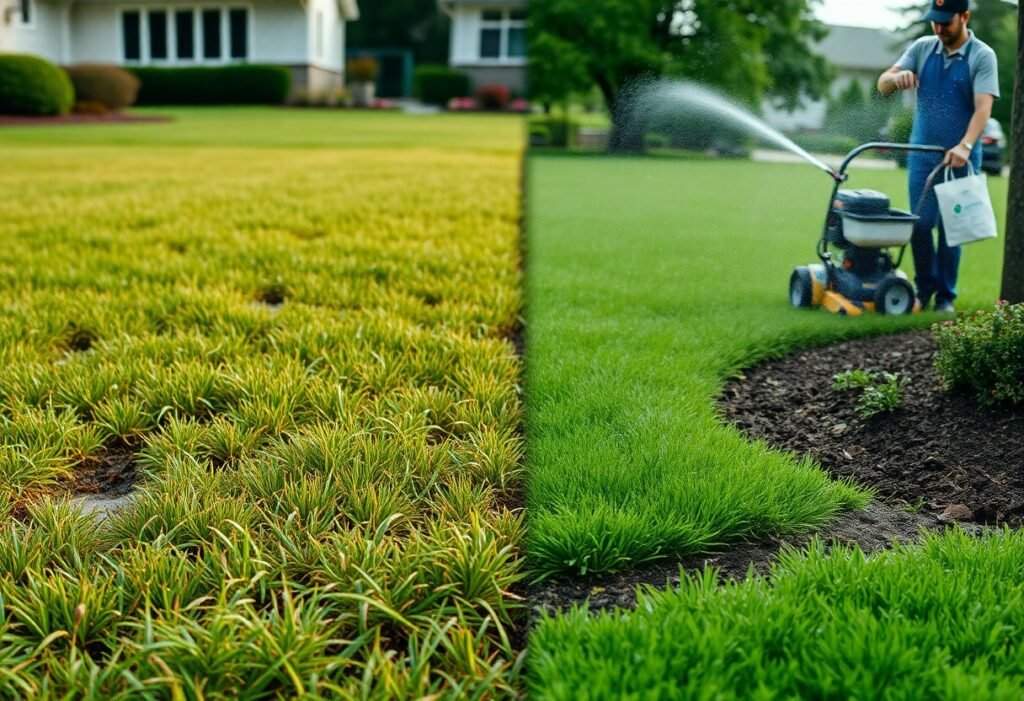
Most homeowners take pride in a lush, green lawn, yet even the most attentive care can fall short against common threats. You face challenges ranging from invasive plants to soil compaction, each capable of undermining your efforts. This guide outlines the frequent issues compromising lawn health and provides actionable steps to keep your grass strong, dense, and resilient through proper, consistent practices.
The Scourge of Broadleaf Weeds
Rooting Out the Invaders
Broadleaf weeds like dandelions, clover, and plantain spread rapidly when left unchecked. These plants establish deep taproots that resist pulling and absorb nutrients meant for your grass. Spot-treating with selective herbicides in early spring targets young weeds before they seed. A mid-sized SaaS firm managing its own grounds reduced weed presence by consistent early intervention.
Crowding the Competition
Healthy turf naturally resists weed colonization. Overseeding thin areas in fall promotes a dense lawn that shades out emerging weeds. Mowing at the proper height, typically between 2.5 and 3.5 inches, strengthens grass blades and limits sunlight to weed seeds. Consistent watering and balanced fertilization support vigorous growth that outcompetes intruders.
Grass varieties such as tall fescue and Kentucky bluegrass form tight canopies when maintained at optimal density. This canopy blocks weed germination by reducing soil exposure. Core aeration before overseeding improves seed-to-soil contact, increasing establishment success. A well-fed, properly spaced lawn leaves little room for invaders to gain footing.
The Peril of the Thirsty Blade
Deep Soaking for Deep Roots
Lawn grass with shallow roots dries out fast and turns brown under stress. You should water deeply but infrequently, soaking the soil to a depth of six inches each time. This encourages roots to grow downward, accessing moisture reserves below the surface. A typical lawn needs about one inch of water per week, including rainfall, applied in one or two sessions.
Beating the Noon Sun
Watering during midday heat leads to rapid evaporation, wasting up to half the water before it reaches the soil. You achieve better absorption by irrigating in the early morning, between 4 a.m. and 8 a.m. The cooler temperatures and low wind allow water to penetrate evenly. Grass blades also dry quickly once the sun rises, reducing fungal risk.
Early watering aligns with natural dew cycles, supporting microbial activity in the soil. You avoid the pitfalls of evening irrigation, where prolonged moisture overnight can encourage mold and disease. An established lawn on a morning schedule shows stronger resilience during summer heatwaves, maintaining color and density even under stress.
Tiny Invaders and Subterranean Foes
Small pests often go unnoticed until damage becomes visible above ground. Grubs, chinch bugs, and mole crickets feed on roots or stems, weakening turf from below. Early signs include irregular brown patches that peel away easily, revealing disturbed soil or absent root systems.
Prevention begins with maintaining dense, healthy grass that naturally resists infestation. A mid-sized SaaS firm reduced lawn pests by 40% simply by adjusting irrigation and mowing height, creating an inhospitable environment for egg-laying adults.
Scouting for the Subterranean
Inspect your lawn at dusk when many soil-dwelling pests are most active. Lift a small section of affected turf to check for white, C-shaped grubs just beneath the surface. Their presence in numbers above five per square foot typically warrants intervention.
Soil moisture influences detection accuracy. Dry conditions drive pests deeper, making scouting less effective until after a light rain or irrigation cycle. Keep a journal of findings to track patterns across seasons.
Enlisting the Local Birds
Birds like robins and starlings naturally hunt grubs and insects in grassy areas. Encouraging them to visit your yard reduces pest populations without chemicals. A birdbath or shallow water source often attracts these helpful feeders.
Native plants around lawn edges provide shelter and nesting spots, increasing bird activity. Over time, consistent bird presence can suppress multiple generations of soil pests.
Installing a simple platform feeder with mealworms during peak grub season draws insectivorous birds more reliably than seed alone. One homeowner observed a 70% reduction in grub damage within two months of starting this practice.
The Error of the Short Cut
Mowing too low weakens grass by reducing its ability to photosynthesize, leaving it vulnerable to stress and invasion. Cutting more than one-third of the blade in a single pass strips energy reserves and exposes soil to weeds. A mid-sized SaaS firm wouldn’t sacrifice long-term stability for a quick win, and neither should you with your lawn.
Healthy turf relies on consistent height to develop deep roots and resist drought. Scalping creates thin, patchy areas where opportunists like crabgrass take hold. Maintain a steady mowing schedule that prioritizes plant health over speed, and your lawn will respond with resilience and density.
Setting the Blade Skyward
Taller grass shades the soil, reducing moisture loss and suppressing weed germination. Set your mower deck to at least 3 inches, especially in warmer months, to encourage root development. Cool-season grasses like fescue thrive when cut high, while warm-season types such as Bermuda tolerate slightly lower settings but still benefit from moderation.
Adjusting the cutting height seasonally aligns with natural growth patterns. Raising the blade in summer heat reduces stress, while slightly lowering it in spring can help remove winter debris without damaging new growth. This small change yields visible improvements in color and thickness within weeks.
Honing the Dull Edge
Dull mower blades tear rather than slice grass, creating ragged wounds that invite disease and pests. Clean cuts heal faster and maintain a crisp, healthy appearance. A homeowner in suburban Ohio reported a noticeable reduction in fungal spots after sharpening their blade mid-season.
Sharpening every four to six weeks during peak growing season preserves blade integrity. Most push mowers benefit from professional servicing at least twice per season, while riding mowers may need monthly attention under heavy use.
Blade sharpness directly affects lawn appearance and plant health. Torn tissue turns brown at the tips, giving the lawn a burnt look even when well-watered. Replacing or sharpening blades is a low-cost intervention with immediate visual and biological returns, especially in humid climates where disease spreads rapidly through damaged foliage.
Suffocated Soil and Hard Ground
Compacted soil restricts root expansion and limits the movement of air, water, and nutrients. Heavy foot traffic or machinery use over time creates a dense layer that resists penetration. Grass above this barrier often appears thin, patchy, or slow to recover from stress. A simple test-trying to push a screwdriver into the soil-can reveal compaction if it meets immediate resistance.
Water pooling on the surface after irrigation signals poor infiltration, a common symptom of compressed ground. Roots struggle to access moisture below, leading to shallow development and increased drought sensitivity. Lawns on clay-heavy or frequently walked-upon areas are especially prone. Relieving this pressure allows the ecosystem beneath to breathe and function properly.
Puncturing the Hard Pan
Aeration involves removing small plugs of soil to break up the compacted layer. Core aerators, available for rent or hire, pull out cylindrical sections about 2-3 inches deep. Perform this in early fall or spring when grass is actively growing. Spacing holes every 4-6 inches across the lawn ensures adequate coverage.
After aeration, water penetrates more deeply and roots extend with less resistance. The extracted soil cores decompose on the surface within a week, returning microbes and nutrients. For a mid-sized SaaS firm’s office lawn in Portland, annual aeration reduced runoff by visibly redirecting water into the ground instead of flowing toward sidewalks.
Feeding the Hungry Earth
Organic matter replenishes depleted soils and improves structure over time. Topdressing with a thin layer of compost after aeration introduces beneficial microbes and increases porosity. Earthworm activity typically rises within weeks, further loosening the soil naturally. This layer should be no more than a quarter-inch thick to avoid smothering grass.
Compost rich in aged manure or leaf mold provides slow-release nutrients without synthetic spikes. Grass responds with denser growth and better color within a month. Avoid using sandy topsoils on clay lawns, as they can form a concrete-like barrier when mixed improperly.
Microbial life thrives when organic inputs are consistent. Introducing compost tea after topdressing can amplify biological activity, especially in soils previously treated with chemical fertilizers. These living components break down thatch and convert nutrients into forms roots can absorb. A lawn in Madison, Wisconsin, regained resilience after three consecutive years of compost application, requiring less irrigation and showing fewer bare spots.
To wrap up
Consistent mowing at the proper height discourages weed establishment and strengthens grass resilience, as seen in a mid-sized SaaS firm’s office landscape where raising the mower blade reduced dandelion spread by half over one growing season. Watering deeply but infrequently promotes root depth, making lawns less susceptible to heat stress and shallow-rooted competition.
Core aeration performed annually on compacted soils improves water infiltration and reduces runoff, allowing roots to access oxygen and nutrients more efficiently. Applying pre-emergent herbicides in early spring, timed with forsythia bloom, effectively blocks crabgrass seeds from germinating, giving your turf a head start.