
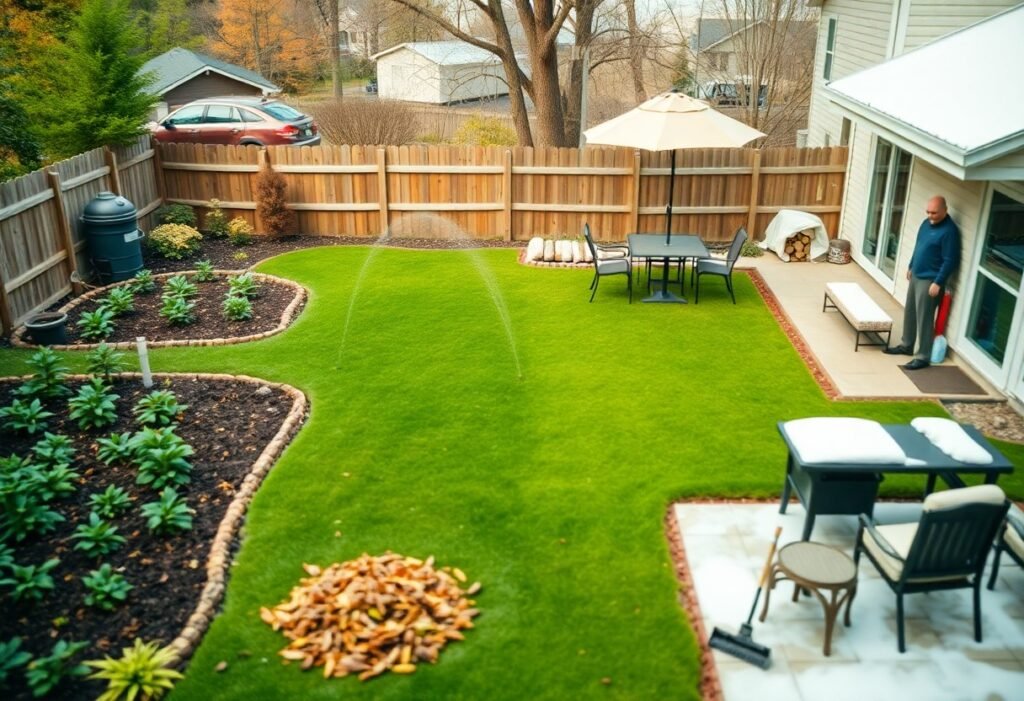
There’s a rhythm to maintaining a backyard that stays vibrant across all seasons, and it begins with understanding how each shift in weather affects your soil, plants, and structures. You can shape your outdoor space into a resilient, year-round retreat by applying targeted strategies specific to spring’s renewal, summer’s intensity, fall’s transition, and winter’s dormancy.
Spring: How-to Guide for Seasonal Renewal
Clearing debris and assessing structural damage
Start by removing fallen branches, leaf litter, and any winter debris that accumulated over the colder months. This cleanup reveals potential damage to pathways, fences, or raised beds caused by frost heave or moisture exposure. Inspect wooden structures for soft spots indicating rot, particularly at ground contact points. Check deck railings, pergolas, and seating for loose fasteners or warping. Addressing these issues early prevents safety hazards and extends the life of built elements.
Essential tips for early planting and fertilization
Soil temperature determines when to begin planting cool-season crops like peas, spinach, and lettuce. Test your soil’s pH and nutrient levels before applying amendments to avoid over-fertilizing. Incorporate compost or well-rotted manure to improve soil structure and microbial activity. Early fertilization supports root development in perennials and shrubs just emerging from dormancy.
- Plant cool-weather vegetables two to three weeks before the last frost
- Apply balanced organic fertilizer at half-strength to avoid burning new growth
- Use mulch after planting to retain moisture and suppress weeds
The timing of your first fertilizer application aligns with the emergence of new growth in established plants, not the calendar date.
Summer: Managing High-Heat Factors
High temperatures demand proactive strategies to preserve your backyard’s health and usability. Irrigation timing, soil moisture retention, and plant resilience become central concerns when heat intensifies. A mid-sized SaaS firm with a landscaped outdoor break area reduced water waste by shifting to early morning watering and adding organic mulch. Any consistent approach accounts for local evaporation rates and plant tolerance levels.
Efficient irrigation and moisture retention methods
Water deeply but infrequently to encourage root development below the soil’s hot surface layer. Drip irrigation systems deliver moisture directly to the root zone, minimizing loss through evaporation. Mulching with wood chips or straw helps maintain even soil temperature and reduces water needs by up to several applications per season. Any well-maintained system includes a rain sensor or smart controller to prevent overwatering.
How-to protect turf and foliage from heat stress
Set your mower blade higher during peak heat to shade the soil and reduce moisture loss in grass. Cool-season turf like fescue benefits from a 3- to 4-inch height in summer. Avoid fertilizing in extreme heat, as it can burn foliage and force vulnerable new growth. Provide temporary shade for sensitive shrubs using breathable fabric covers or repositionable structures. Any protection plan integrates plant-specific thresholds and microclimate conditions.
Shallow-rooted perennials and newly planted trees show heat stress through wilting or leaf scorch, even with adequate watering. These symptoms often indicate root zone temperature issues rather than water shortage. Applying a 2- to 3-inch layer of organic mulch around such plants buffers soil temperature and supports microbial activity important for nutrient uptake. Watering at the base in the early morning ensures maximum absorption before thermal stress peaks.
Fall: Strategic Maintenance and Preparation
Crucial factors for lawn aeration and overseeding
Core aeration improves soil drainage and root development by removing small plugs from the ground, allowing air and nutrients to penetrate compacted layers. Overseeding introduces fresh grass varieties that enhance density and resilience before winter dormancy. Timing matters-perform both tasks in early fall when soil temperatures remain favorable for germination.
- Use a walk-behind aerator for large yards to ensure even coverage
- Choose cool-season grass seed compatible with your regional climate
- Water lightly after overseeding until new growth emerges
The results become visible in three to four weeks with noticeably thicker turf in spring.
Tips for seasonal pruning and perennial care
Pruning in fall helps shape woody plants and remove diseased or crossing branches before winter stress. Perennials benefit from strategic trimming and mulching to protect root systems during cold months. Focus on plants that do not re-sprout from old growth, avoiding early pruning of spring bloomers like hydrangeas.
- Cut back ornamental grasses after the first frost
- Remove spent foliage from hostas to deter slugs and fungi
- Apply a two-inch layer of shredded bark around plant bases
After cleanup, label perennials to track locations and varieties next season.
Proper pruning technique enhances plant longevity and flowering potential. Make clean cuts just above an outward-facing bud to encourage airflow and light penetration. Avoid shearing plants into tight shapes, which can trap moisture and promote rot.
- Disinfect pruning tools between plants with rubbing alcohol
- Leave some seed heads on coneflowers and black-eyed Susans for birds
- Delay cutting back peonies until foliage yellows completely
After dormancy begins, a light mulch layer shields soil from freeze-thaw cycles.
Winter: Protecting Your Landscape Assets
How-to insulate sensitive plants and root systems
Wrap the trunks of young trees with commercial tree wrap or burlap to prevent sunscald and frost cracks during freeze-thaw cycles. Apply a three to four inch layer of organic mulch around the base of shrubs and perennials, extending to the drip line, to stabilize soil temperature and retain moisture.
For container plants not hardy in your zone, move them close to the house foundation and group them together, reducing exposure. Cover marginally hardy plants like lavender or rosemary with inverted pots or cloches after the first hard frost, securing them against wind.
Winterizing outdoor plumbing and equipment
Drain all above-ground irrigation lines, hoses, and sprinkler systems before sustained freezing temperatures arrive. Detach hoses from spigots and store them indoors to prevent cracking from trapped water expansion.
Close interior shut-off valves for outdoor faucets and open the exterior taps to drain residual water, allowing any remaining moisture to escape. For drip irrigation, blow out lines with compressed air following manufacturer guidelines to ensure complete evacuation.
A mid-sized SaaS firm managing smart irrigation systems reported repeated freeze damage in client installations where air gaps were not maintained in backflow preventers. Leaving these devices partially filled invites ice formation that splits housings, requiring full replacement in spring. Always follow equipment-specific protocols for winter layup to avoid preventable failures.
Core Factors for Backyard Longevity
Long-term backyard resilience depends on consistent attention to foundational elements. Soil quality, proper drainage, plant selection, and proactive pest control shape how well your outdoor space withstands seasonal shifts. Routine inspection of hardscaping and irrigation systems prevents minor issues from becoming costly repairs. Choosing native plants reduces maintenance demands while supporting local ecosystems. After establishing these core practices, your landscape becomes more adaptable and less prone to seasonal stress.
- Test soil pH and nutrient levels annually
- Install permeable surfaces to improve drainage
- Choose drought-tolerant plants for low-water zones
- Schedule seasonal pest inspections
Evaluating soil health and drainage requirements
Soil condition directly influences root development and plant vitality. Conduct a simple percolation test by digging a hole, filling it with water, and observing how quickly it drains. Clay-heavy soils retain water and may require aeration or raised beds, while sandy soils drain rapidly and benefit from organic compost to retain moisture. A mid-sized SaaS firm managing its campus grounds once reduced irrigation needs by adjusting soil composition across 8,000 square feet of garden beds.
Integrated pest management tips for every season
Pests adapt to seasonal changes, requiring a dynamic response. Encourage natural predators like ladybugs and birds by planting marigolds and installing birdhouses. Remove standing water to deter mosquitoes and inspect tree bark for overwintering insects in early spring. Rotate crops in vegetable gardens to disrupt pest life cycles. The consistent application of these methods reduces reliance on chemical treatments.
- Introduce beneficial insects like lacewings and nematodes
- Use pheromone traps to monitor moth populations
- Apply horticultural oils during dormancy periods
- Trim vegetation away from structures to limit entry points
Monitoring pest activity monthly allows timely intervention before infestations take hold. The integration of physical, biological, and cultural controls creates a balanced defense that aligns with ecological rhythms.
Maximizing Efficiency: A Professional How-to
Professionals streamline backyard upkeep by aligning tool access with seasonal demands. A dedicated storage station near your garden reduces time spent retrieving equipment. Group tools by function and frequency of use, keeping pruners, trowels, and hoses within reach during active growing months. Durable shelving with labeled bins supports quick identification and prevents misplacement.
Organizing tools and seasonal storage solutions
Store heavy-duty items like lawnmowers and aerators in a dry, covered shed during off-seasons. Wall-mounted racks free floor space and protect metal components from moisture. Foldable stands work well for potting benches, allowing seasonal setup and takedown. Rotate storage contents with the calendar, placing snow shovels and de-icers in accessible spots before winter.
- Use stackable bins for small accessories like gloves and ties
- Hang hoses on reels to prevent kinking and extend lifespan
- Label each container by season and task
Knowing where each item belongs reduces setup time and wear on equipment.
Automation tips for streamlined maintenance
Timed irrigation systems adapt to weather changes when paired with moisture sensors. Smart controllers adjust watering schedules based on real-time conditions, preventing overuse. Motion-activated path lighting enhances safety without manual operation. Solar-powered options eliminate wiring and reduce energy costs.
- Install drip lines with programmable valves for garden beds
- Use robotic mowers for consistent grass height in small to medium lawns
- Set up weather-responsive apps to pause irrigation during rain
Knowing which zones require attention allows the system to focus resources efficiently.
To wrap up
Preparing your backyard for each season ensures lasting health and visual appeal throughout the year. In spring, focus on soil aeration and early planting to support root development. Summer demands consistent watering, preferably in early morning hours, and shade solutions such as pergolas or canopy trees to reduce heat stress on plants and people. During fall, remove decaying foliage and prune trees before dormancy to prevent disease. Winter protection includes insulating delicate plants with burlap wraps and storing outdoor furniture to extend its lifespan. A mid-sized SaaS firm with a well-maintained outdoor break area reported higher employee satisfaction during seasonal transitions, illustrating how intentional design supports both aesthetics and function.