
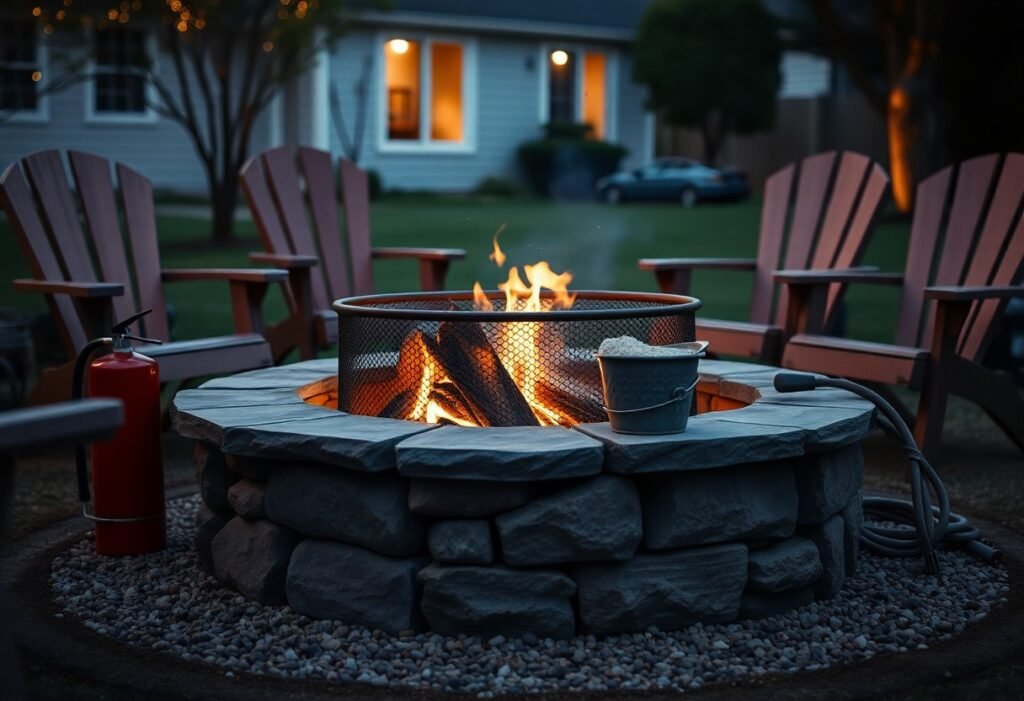
With backyard fire pits becoming a centerpiece for evening gatherings, your safety depends on knowing how to use them responsibly. A single spark in dry conditions has led to unintended grass fires in suburban neighborhoods, underscoring the need for proactive precautions. This guide outlines actionable steps to keep your outdoor space enjoyable and secure.
Finding Solid Ground
Choose a flat, stable surface well away from trees, structures, and deck railings. Gravel, stone, or concrete pavers provide non-combustible bases that resist heat transfer and prevent grass or soil from igniting. Avoid placing the fire pit on wooden decks unless the unit is explicitly rated and labeled for such use.
Ensure the ground does not slope more than a few degrees, as even slight inclines can cause flames or coals to shift unpredictably. A level foundation also keeps the fire contained within the ring and reduces the risk of rolling embers escaping. One homeowner in Colorado reported a yard fire spreading to dry mulch after a pit shifted on uneven terrain during use.
Feeding the Fire
Start with dry, seasoned hardwood like oak or maple, as green or wet wood produces excess smoke and sparks. Add logs gradually, keeping the fire manageable and preventing flare-ups that could endanger nearby people or structures. Never use flammable liquids such as gasoline or lighter fluid to ignite or revive flames; the risk of sudden ignition is too high.
Limit each addition to one or two pieces at a time, ensuring they fit securely within the pit’s boundaries. A mid-sized SaaS firm hosting an evening gathering learned this the hard way when oversized logs rolled out, igniting dry grass just beyond the stone border. Keep a close eye on wind shifts, which can carry burning embers toward overhanging branches or patio furniture.
The Right Tools
Keep a metal poker, tongs, and a shovel near your fire pit to manage burning materials safely. These tools allow you to adjust logs or spread ashes without stepping too close or using makeshift items that could fail under heat. A dedicated fire blanket or fire extinguisher rated for Class B and Class C fires should also be within arm’s reach, especially in dry or windy conditions.
Choose long-handled tools made of stainless steel or cast iron to avoid warping or conducting heat. One mid-sized SaaS firm’s outdoor team lead reported switching from wooden-handled tools after a near-miss with ignition during a winter gathering. Store all equipment in a dry, labeled container nearby so they’re ready when needed.
Watching the Sky
Overhead conditions play a direct role in how safely your fire pit operates on any given evening. You should always check for low-hanging branches, tree cover, or nearby structures that could catch fire from stray sparks, especially during dry seasons when vegetation is more flammable. A safe clearance of at least 10 feet above the flame is recommended, though greater distance is better in windy conditions.
Weather changes can affect fire behavior in unexpected ways. If you notice smoke lingering at ground level or blowing horizontally instead of rising, it may indicate poor atmospheric dispersion, a sign to extinguish the fire early. This is particularly common during temperature inversions, which trap smoke and increase inhalation risks, especially for children or those with respiratory sensitivities.
Keeping Guard
Someone must remain near the fire pit at all times while flames are active, even if the fire appears small or contained. A momentary distraction can lead to sparks reaching dry leaves or low-hanging branches, especially in windy conditions. Your presence allows immediate response to shifting embers or unexpected flare-ups.
Children and pets require consistent supervision within a 3-foot perimeter, as sudden movements can lead to accidents. Use a sturdy gate or barrier if needed, particularly during gatherings when attention may be divided. A focused watch prevents mishaps before they escalate.
Killing the Embers
Water is your most effective tool for fully extinguishing leftover embers. Slowly pour water over the fire pit, ensuring every glowing fragment is doused until no hissing sounds remain and steam stops rising. Stir the ashes with a metal rod to expose any hidden heat pockets, then apply more water as needed.
Cold ash can still contain warmth capable of reigniting under the right conditions. After dousing, wait at least 20 minutes before touching the pit area, and always verify the temperature with the back of your hand held just above the surface. A mid-sized SaaS firm learned this the hard way when residual heat sparked a grass fire days after apparent extinguishment.
To wrap up
Position your fire pit at least 10 feet away from any structure, overhanging branches, or flammable materials to reduce the risk of accidental ignition. Always check local regulations before lighting a fire, as some areas enforce seasonal burn bans or require permits. Use only dry, seasoned wood and avoid accelerants like gasoline, which can cause sudden flare-ups. Keep a garden hose, bucket of water, or fire extinguisher nearby during use. After the fire dies down, fully extinguish the embers with water, stir the ashes, and apply more water if needed-never leave smoldering remains unattended. A responsible approach ensures safe, enjoyable gatherings for years to come.