
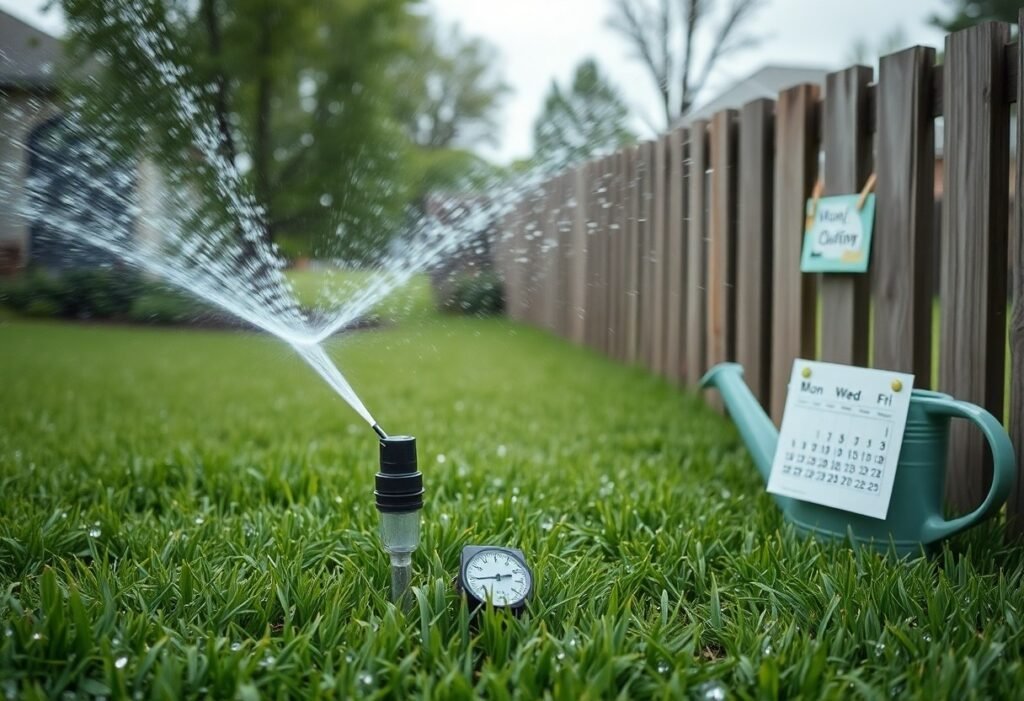
It’s easy to assume a daily sprinkle keeps your lawn thriving, but overwatering is among the most common causes of weak, shallow-rooted grass. You likely see patches of thinning turf or moss forming in damp areas, signs your current routine may be doing more harm than good. Proper watering isn’t about frequency alone, but timing, volume, and understanding what your specific grass type truly needs to grow strong and resilient.
The Language of the Blade
Identifying the Faint Curl of Wilt
Grass blades that curl slightly inward along their length signal the first stage of moisture deficit. This subtle folding reduces surface area exposed to sun and wind, a natural defense against water loss. You’ll notice the effect most in fescue or bluegrass varieties, where the curl appears as a tight, pencil-like roll when viewed end-on.
The Footprint Test on the Sward
Step firmly onto the lawn and observe the grass where your foot pressed. If the blades remain flattened and do not spring back, the lawn is dry and in need of water. This test works best in mid-afternoon when evaporation stress peaks, giving an accurate read on resilience.
A healthy, well-hydrated lawn rebounds within seconds, showing elasticity in the crown and stolon structure. Bentgrass and Bermuda lawns demonstrate this recovery quickly, while ryegrass may show slight delay under intense heat.
The Wisdom of the Deep Soak
Promoting Resilient Root Systems
Deep watering encourages roots to grow downward in search of moisture, anchoring the plant more securely. A mid-sized SaaS firm maintaining its campus landscaping found that reducing watering frequency while increasing depth led to noticeably stronger turf resilience during dry spells. Grass with access to deeper moisture recovers faster after foot traffic and heat stress.
Roots trained to rely on surface water remain shallow and vulnerable. When you water deeply once or twice a week, you signal the grass to adapt, sending roots a foot or more into the soil. This creates a self-sustaining system that thrives even under summer pressure.
Avoiding the Shallow Sprinkling Trap
Light, daily watering keeps moisture only in the top inch of soil, where roots quickly dry out. This pattern invites shallow root development and increases dependency on constant irrigation. Many suburban lawns suffer from this cycle, requiring near-daily attention just to stay green.
Evaporation rates spike when water sits on the surface under midday sun, wasting up to half the volume before it reaches roots. Frequent sprinkling also promotes fungal growth in leaf tissue, especially in dense varieties like Kentucky bluegrass.
Running your sprinkler for 10 minutes every day saturates only the surface, inviting weed competition from dandelions and crabgrass that thrive in disturbed, moist topsoil. Instead, apply one inch of water over a single session to penetrate below the thatch layer, reaching the root zone where sustained hydration matters.
Rhythms of the Morning Sun
Watering your lawn between 6 a.m. and 10 a.m. aligns with the plant’s natural metabolic cycles. Grass absorbs moisture most efficiently when temperatures are cool and winds are light. Early hydration allows water to penetrate deeply before the day’s heat accelerates surface loss. A mid-sized SaaS firm managing its campus landscaping reduced water use by adjusting irrigation to this window without sacrificing turf quality.
Evaporation and the Noon Heat
Midday watering can waste up to 30% of applied water due to rapid evaporation. When the sun peaks, droplets on blades act like tiny magnifiers, increasing leaf temperature and stress. Irrigation during these hours forces the system to run longer to achieve the same soil saturation. Shifting schedules away from noon maintains efficiency even in dry spells.
Preventing Fungal Growth at Twilight
Evening moisture lingers too long on blades, creating damp conditions ideal for fungal pathogens like dollar spot or brown patch. These diseases thrive when grass remains wet overnight, especially in humid climates. Watering too late disrupts the plant’s ability to dry before darkness sets in.
Fungal spores spread easily in wet thatch layers, particularly in cool-season grasses such as Kentucky bluegrass. Irrigating in the morning allows sunlight to dry leaf surfaces within an hour, breaking the infection cycle. A university grounds team eliminated recurring turf blight simply by shifting irrigation from 8 p.m. to 6 a.m.
Variations in the Living Earth
Soil composition directly influences how often you should water your lawn. What lies beneath the surface determines how long moisture remains available to roots. Two primary soil types-clay and sand-respond very differently to irrigation.
A mid-sized SaaS firm managing campus landscaping might adjust watering schedules weekly based on soil feedback. Recognizing these differences allows for precise, effective lawn care tailored to the land’s natural behavior.
Clay Foundations and Water Retention
Clay soils hold water tightly due to their dense particle structure. You may only need to water once every five to seven days, as moisture lingers deep within the profile. Overwatering here risks suffocating roots and encouraging shallow growth.
Signs of poor drainage, such as puddling or spongy turf, often appear when irrigation exceeds the soil’s absorption rate. Adjusting frequency, not duration, prevents damage while maintaining hydration.
Sandy Terrains and Rapid Drainage
Sandy soils allow water to pass through quickly, offering little resistance. You’ll likely need to irrigate every two to three days during warm months to maintain consistent moisture. Without frequent input, the root zone dries out fast.
Turf on sandy plots often shows stress sooner, with footprints remaining visible long after walking across the lawn. Short, repeated watering cycles help overcome rapid percolation.
A golf course built on coastal sand dunes may use moisture sensors every 20 yards to monitor real-time conditions. These readings guide daily adjustments, ensuring each zone receives only what it needs, no more, no less.
Seasonal Ebbs and Flows
Spring Awakening and Moderate Needs
As temperatures rise in early spring, your grass begins active growth after winter dormancy. Roots reestablish and blades green up, requiring consistent moisture but not saturation. Water once or twice weekly, allowing the soil to dry slightly between sessions to encourage deeper root development. A mid-sized SaaS firm managing its campus landscaping might reduce irrigation frequency compared to summer, aligning with natural rainfall patterns.
Summer Intensity and Dormancy Rules
High heat often pushes cool-season grasses toward dormancy, especially during prolonged dry spells. You may notice browning, but this is a survival mechanism, not a signal for excessive watering. Established lawns can survive weeks without irrigation, resuming growth when conditions improve. Water only if you aim to maintain green color, applying about one inch per week in the early morning.
During extreme heat, even well-established lawns benefit from a deep soak every two to three weeks to prevent root death. This minimal hydration sustains the crown and rhizomes without encouraging shallow rooting or fungal issues. Grasses like Kentucky bluegrass may remain brown but alive, rebounding within days once regular moisture returns.
The Measurement of Life
Understanding how much water your lawn actually receives requires more than guesswork. You need a reliable way to measure output and absorption, especially since sprinkler systems vary widely in efficiency. A simple method can transform vague routines into precise care.
Consistency in measurement reveals patterns invisible to casual observation. Over time, small adjustments based on actual data lead to deeper roots and stronger grass. The goal is not frequency, but adequacy-delivering the right volume where it’s needed most.
The Tuna Can Method for Volume
Place clean tuna cans or similar straight-sided containers across your lawn before running the sprinklers. These act as primitive rain gauges, collecting water during irrigation. After the cycle ends, measure the depth of the collected water with a ruler.
Multiple cans help account for uneven spray patterns. If one can shows half an inch while another has only a quarter, you’ll know your system needs recalibration. A mid-sized SaaS firm might track server loads similarly, but your lawn responds to physical data, not dashboards.
Adjusting for Natural Rainfall
Your sprinkler schedule must reflect recent rainfall, not just calendar dates. Soil retains moisture after storms, and overwatering then leads to shallow roots and fungal growth. Skip irrigation entirely if your area received a solid soaking in the past few days.
Smart controllers can use local weather data to pause cycles automatically. Without such technology, rely on a rain gauge and observation. A heavy thunderstorm may deliver enough water to last several days, depending on soil type and drainage.
Clay soils hold water longer than sandy ones, meaning even moderate rainfall can reduce irrigation needs for up to five days. You’ll notice puddles or dampness lingering in low spots, a clear sign the ground is still saturated. Adjust your watering accordingly, delaying the next cycle until the top inch of soil feels dry to the touch.
Final Words
Watering your lawn once or twice weekly encourages deeper root development, especially when each session delivers about an inch of water. You’ll notice stronger growth in areas with consistent moisture reaching the root zone, rather than frequent shallow sprinklings that promote weak, surface-dependent roots. A mid-sized SaaS firm reduced its landscape maintenance costs by adjusting irrigation to early morning cycles aligned with evapotranspiration rates, minimizing runoff and fungal risk.
Your local climate and soil type ultimately dictate the ideal schedule, but observing grass color and footprint resilience offers real-time feedback. When footprints remain flattened, it signals the lawn needs water. Adjust based on rainfall, using a simple rain gauge or tuna can to measure input accurately.