
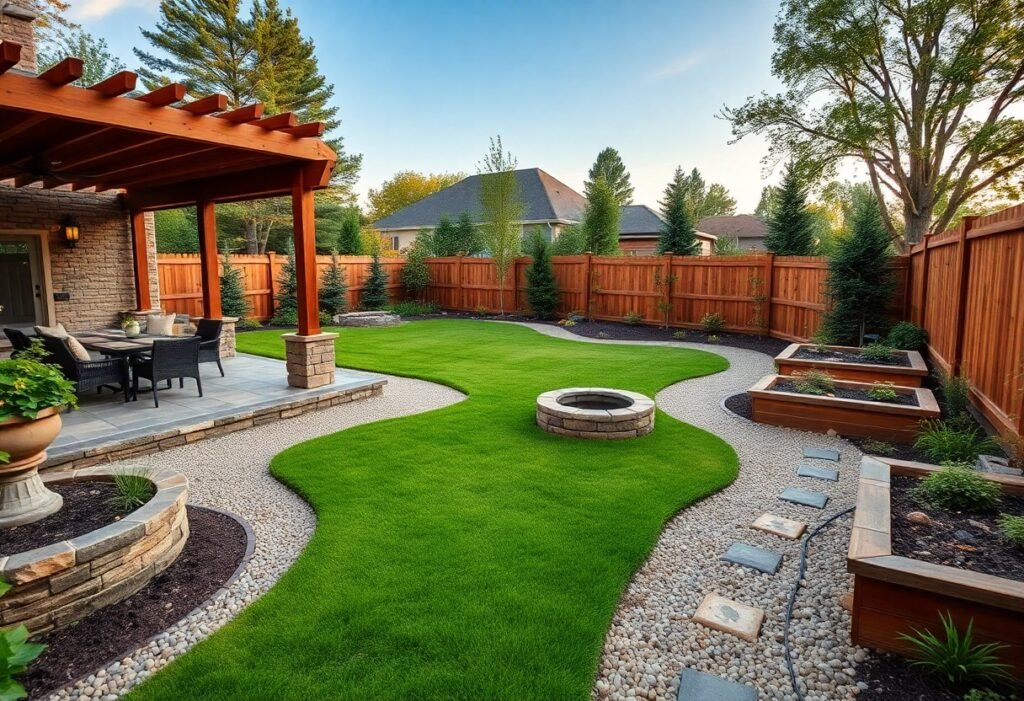
It’s possible to transform your backyard into a cohesive, functional retreat when you apply foundational design principles that balance aesthetics and usability. You can shape outdoor spaces that feel intentional and inviting by understanding how layout, plant selection, and natural elements interact over time, much like a mid-sized SaaS firm streamlines user experience through thoughtful interface design.
The Geometry of the Wild
Lines of Natural Movement
Paths through your yard should follow the way you naturally walk, not force you into rigid patterns. Curved walkways that mimic animal trails or eroded streambeds guide steps more intuitively than straight lines. You’ll find yourself drawn along gentle arcs that feel organic, not imposed.
Observe how foot traffic forms over time, wearing faint trails from doorways to gardens or trees. These informal routes reveal where pathways belong. Build from those cues, using gravel, stepping stones, or low moss between pavers to formalize what nature has already suggested.
Balance of Open Space
Open areas give the eye room to rest and the body space to gather. A small lawn, sand patio, or gravel clearing acts as a visual pause between plantings. You don’t need vast stretches-just enough to host a morning yoga session or a child’s game of tag.
Too much openness feels barren, too little creates clutter. Aim for pockets of emptiness framed by foliage, like a courtyard nestled between shrubs and a pergola. A mid-sized SaaS firm’s campus redesigned its backyard space using this principle, reducing turf by 40% while increasing usable gathering zones.
That redesign succeeded because it treated open space as intentional, not leftover. You assign function to emptiness-dining, play, meditation-and shape it with surrounding plants and hardscape. The boundary between full and free becomes a design feature, not an afterthought.
Living Walls and Boundaries
Planting for Solitude
Evergreen shrubs like boxwood or privet form dense screens that buffer noise and prying eyes without closing off airflow. A mid-sized SaaS firm’s headquarters in Portland uses hawthorn and laurel hedges to create quiet zones within its campus, proving privacy need not feel isolating. These plantings mature into living barriers that shift subtly with the seasons, offering texture and life where wood or stone would stand inert.
Height matters when designing for seclusion. Planting taller species like arborvitae along property lines establishes a vertical green wall within three to five years, depending on climate. Position lower perennials at their base to eliminate gaps and create a layered effect that discourages trespass while inviting birds and pollinators.
Fencing with Intent
Fences define more than property lines-they shape movement and mood. A simple cedar lattice guides the eye upward, encouraging climbing roses while allowing dappled light to pass. In suburban Melbourne, a family installed a staggered timber screen with intentional sightline breaks, preserving neighborly connection while shielding their dining area from street view.
Material choice affects both durability and atmosphere. Wrought iron lasts decades and conveys openness, while bamboo rolls offer temporary screening at low cost. Each option carries maintenance trade-offs: metal may rust, wood can warp, and living fences require pruning. Your selection should align with how you use the space, not just aesthetics.
Consider gate placement as part of your fencing strategy. Positioning entry points away from direct street access creates a sense of arrival and slows foot traffic into private zones. A curved path leading through a side gate in Berkeley, California, extends the transition from public to private, using distance and angle to enhance perceived seclusion without raising walls.
The Purpose of Each Patch
Defining Functional Zones
Every section of your yard should serve a clear role, whether for dining, play, or quiet reflection. A mid-sized SaaS firm’s CEO transformed a sloped corner into a gravel terrace for morning coffee, using local stone to anchor the space. Seating, sun exposure, and proximity to the house help determine each zone’s use.
Pathways should guide movement without dominating the landscape. A curved brick walkway in Austin connects a vegetable bed to an outdoor kitchen, reinforcing purpose through material and alignment. Zones work best when their function is immediately legible to anyone stepping outside.
Transitions Between Elements
Softening edges between lawn, garden, and hardscape prevents abrupt visual breaks. A gradual shift from turf to creeping thyme, then to mulched native beds, mimics natural ecotones found in woodland edges. This layering supports both aesthetics and soil health.
Low boxwood hedges in a Bethesda backyard separate a play area from a meditation nook without blocking sightlines. These subtle dividers maintain openness while defining space through texture and height variation.
Consider how materials underfoot influence flow. Stepping stones set in moss bridge a patio and a shaded fern glade, their irregular spacing slowing movement and encouraging attention to detail. Such transitions are not merely decorative; they shape how you experience time outdoors.
Light and Shadow Play
Harnessing the Sun
Positioning seating areas to face south ensures consistent sunlight during cooler months, enhancing comfort without artificial heating. You can align pathways with the sun’s arc to highlight key garden features at different times of day.
Deciduous trees planted on the east or west side provide summer shade while allowing winter light, balancing temperature and energy use. Solar-powered lights embedded along gravel paths activate at dusk, offering subtle guidance.
Creating Cool Sanctuaries
Shade sails stretched over patios reduce ambient heat by creating microclimates suitable for lounging during peak sun. You might install a pergola draped with climbing vines like wisteria to filter light and add seasonal texture.
Ground cover such as creeping thyme stays cooler than concrete and releases a soft aroma when stepped on. These shaded zones become natural retreats, especially when paired with a small water feature that increases local humidity.
A mid-sized SaaS firm transformed its employee courtyard with angled timber louvers that block afternoon glare while permitting morning warmth, demonstrating how deliberate shading supports prolonged outdoor use. The structure’s orientation was calibrated to the summer solstice, minimizing direct sun penetration past 2 p.m.
Selecting Native Inhabitants
Plants that Belong
Native plants are adapted to your region’s soil, rainfall, and temperature patterns, reducing the need for supplemental watering once established. Species like black-eyed Susan in the Midwest or coastal sagebrush in California thrive with minimal intervention, reflecting generations of local adaptation. You benefit from fewer pests and less maintenance when choosing flora that evolved in your area.
These plants also support regional biodiversity by providing familiar food sources for pollinators and birds. A mid-sized SaaS firm’s campus in Portland replaced ornamental ivy with Oregon grape and red flowering currant, resulting in a measurable uptick in hummingbird visits within one season.
Sustaining Local Life
Local wildlife relies on specific plant relationships developed over centuries. By planting milkweed, you directly support monarch butterfly larvae, which feed exclusively on this genus. Other insects, such as native bees, depend on early-blooming wildflowers like goldenrod or aster for survival after winter.
Creating habitat corridors with native shrubs and perennials allows animals to move safely through suburban areas. A study in Austin showed neighborhoods with connected native plantings had higher small mammal diversity than those with exotic landscaping.
Even a modest backyard can become part of a larger ecological network when you choose plants that feed and shelter local species. Replacing a patch of turf with a cluster of serviceberry trees invites songbirds, provides edible fruit, and strengthens the local food web without irrigation or fertilizers.
The Rhythm of Water
Elements of Flow
Water moves with intention in a well-designed backyard, guiding the eye and calming the mind. A gently recirculating fountain in a corner seating area creates a soft auditory backdrop without overwhelming the space. Curved channels mimic natural streams, directing flow toward a small basin where dragonflies occasionally land. Linear troughs suit modern layouts, their still surfaces reflecting sky and foliage. The sound should remain subtle, never intrusive, enhancing rather than dominating the atmosphere.
Conservation of Resources
Recirculating pumps reduce water waste while maintaining motion and visual interest. A mid-sized SaaS firm’s urban courtyard uses a closed-loop system that uses less than 20 gallons weekly despite a 12-foot cascading feature. Rainwater harvested from nearby gutters feeds into submerged reservoirs, minimizing reliance on municipal supply. Permeable surrounds allow excess to seep into the ground rather than run off.
Integrating a dry creek bed alongside the water feature absorbs overflow during heavy rain, transforming a potential drainage issue into a design element. Gravel and native stone line its path, supporting local plantings that thrive in intermittent moisture. This method reduces erosion while eliminating the need for mechanical drainage solutions, aligning function with natural patterns.
Final Words
Every decision you make in your backyard shapes a living system that balances beauty and function. Thoughtful placement of native plants ensures resilience, while intentional hardscaping guides movement and use throughout the seasons. You create not just an aesthetic but a habitat that supports pollinators, manages rainfall, and evolves with minimal intervention. A mid-sized SaaS firm’s CEO once transformed a flat, lifeless yard into a layered ecosystem using these principles, reducing irrigation needs by half within two years.
Your backyard is never static. It responds to sun angles, soil composition, and local wildlife patterns. By aligning design with natural processes rather than overriding them, you cultivate a space that thrives with less upkeep. Consider how a simple shift in path material from concrete to permeable gravel can reduce runoff and invite beneficial insects. These choices compound, resulting in a landscape that feels effortless because it works with, not against, its environment.