
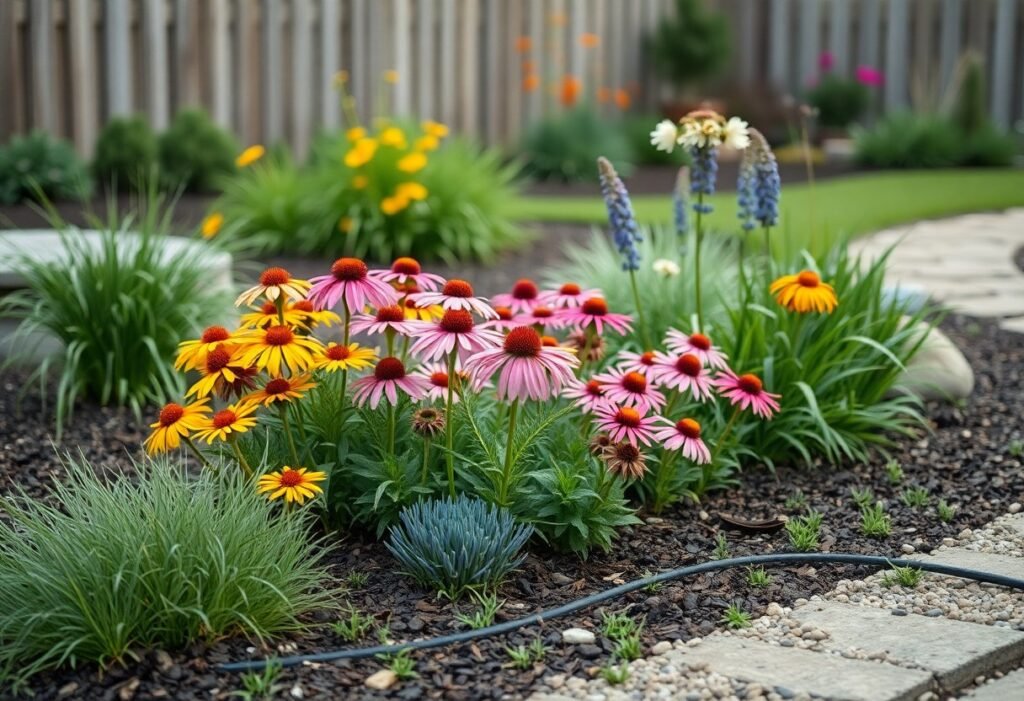
With native plants, your backyard can thrive on local rainfall, resist regional pests, and reduce mowing and fertilizing. You benefit from species already adapted to your soil and climate, such as black-eyed Susan in the Midwest or California poppy along the coast. These plants establish deep roots, suppress weeds, and support pollinators without intensive care.
The Economy of the Local Earth
Roots of Ancient Wisdom
Indigenous plant species evolved alongside regional soil chemistry, forming efficient nutrient cycles that require no synthetic supplements. A native oak in the eastern woodlands, for example, supports mycorrhizal networks that enhance its access to phosphorus while improving soil structure for neighboring plants.
These relationships developed over millennia, allowing roots to penetrate at depths and angles suited to local moisture patterns. You benefit from this inherited efficiency when your garden thrives without irrigation or fertilizers.
The Sky as a Gardener
Rainfall patterns shape the growth rhythms of native perennials like black-eyed Susan and little bluestem. Their seasonal cycles align precisely with regional precipitation, reducing the need for supplemental watering.
Cloud cover and seasonal light shifts influence flowering times and dormancy periods, cues that non-natives often misread. You observe fewer pests and stronger resilience when plants follow the sky’s natural schedule.
Eastern red columbine blooms just as spring rains taper, its roots already deep enough to access residual moisture. This synchronization means you avoid installing drainage systems or moisture-retaining mulches that non-natives demand.
Flora of Minimal Interference
Perennials of Sturdy Character
Black-eyed Susan thrives with little attention, returning each summer without supplemental watering or fertilization. Its bright yellow blooms attract pollinators while resisting common garden pests. A mid-sized SaaS firm might spend thousands on maintenance, but this perennial demands neither time nor resources to flourish. Once established, it outcompetes weeds through dense root networks.
Native coneflower spreads slowly on its own, forming clumps that stabilize soil on slopes. You’ll find it blooming from midsummer into fall, even in compacted or nutrient-poor ground. These plants evolved under regional weather extremes, making them resilient to drought and temperature swings.
Groundcovers as Living Mulch
Creeping thyme forms a dense mat between stepping stones, releasing fragrance when stepped on while blocking weed growth. It requires no mowing and tolerates light foot traffic. Unlike wood mulch, it doesn’t decompose or need annual replacement.
Vinca minor, with its glossy leaves and blue flowers, spreads steadily beneath trees where grass won’t grow. It holds soil in place on shaded banks and reduces the need for irrigation.
These groundcovers suppress weeds by limiting sunlight to the soil surface, reducing the need for manual weeding or herbicides. Their root systems improve soil structure over time, increasing water infiltration and reducing erosion, especially on slopes or under tree canopies where traditional mulch washes away easily.
The Virtue of Wild Meadows
Replacing the Vain Lawn
Transforming your turf into a wild meadow reduces mowing, watering, and fertilizing. A mid-sized SaaS firm in Oregon replaced its front lawn with native grasses and forbs, cutting landscape maintenance hours by half. Species like California poppy and purple needlegrass establish dense root systems that resist weeds and erosion.
Many municipalities now offer rebates for removing traditional lawns. You can seed a meadow in fall or install plugs in spring. Within two growing seasons, blooms attract pollinators and create seasonal interest without irrigation. Clover and yarrow thrive where fescue once demanded constant care.
Welcoming the Wild Inhabitants
Native bees, such as the blue orchard species, nest in hollow stems left standing through winter. Birds like goldfinches feed on coneflower seeds in late autumn, drawn to the structure of unplucked stalks. You don’t need to install feeders or houses when plants provide natural shelter and food.
Frogs and toads take cover beneath leaf litter near meadow edges, preying on slugs and mosquitoes. A homeowner in western Washington observed twice as many beneficial insects after letting a corner of the yard grow wild. These creatures integrate into the plant cycle, reducing pest outbreaks without intervention.
Ground beetles emerge at night to patrol the soil surface, hunting cutworms and other pests. Their presence signals a balanced system where predators and prey coexist without chemical controls. You gain resilience simply by allowing native flora to mature and decay on schedule.
Shrubs of Natural Form
Hedgerows Without the Shears
Native shrubs like buttonbush or winterberry grow in dense, rounded forms that require no trimming to look intentional. Their natural symmetry reduces the need for seasonal pruning, saving hours of labor each year. A row of inkberry holly along a property line creates a year-round screen without demanding weekly shaping.
These plants adapt to local soil and rainfall patterns, so irrigation and fertilization become rare exceptions. Once established, a hedge of New Jersey tea withstands drought and resists pests without chemical intervention. Your boundary lines stay defined with little more than an occasional mulch.
Provisions for the Feathered Guest
Serviceberry shrubs produce early spring berries that attract cedar waxwings and robins, turning your yard into a seasonal feeding station. Their blossoms also host native bees before the fruit sets. You gain movement and sound in the garden without installing feeders or baths.
Gray dogwood provides dense branching structure where songbirds nest safely from predators. In autumn, its white berries feed migrating thrushes. The shrub’s fall color adds visual warmth while supporting ecological function.
Leaving seed heads and stems intact through winter gives goldfinches access to native achillea and echinacea seeds during cold months. These shrubs and perennials together sustain birds across seasons, reducing the need for supplemental feeding while increasing natural activity in your space.
Practical Steps for the Simple Plot
Observation of the Sun
Track how sunlight moves across your yard over several days, noting which areas receive full sun, partial shade, or deep shade. This pattern determines which native species will thrive without supplemental watering or artificial light. A spot that bakes for six hours in summer may suit butterfly weed or little bluestem, while a north-facing corner could support wild ginger or eastern columbine.
Planting for the Long Sabbath
Choose perennials that return reliably each year with little intervention, such as purple coneflower or New England aster. These plants develop deep root systems over time, reducing the need for irrigation and resisting weed encroachment. Once established, they require only occasional pruning or division every few years.
Over time, these plants form self-sustaining clusters that spread gently, filling gaps without becoming invasive. A mid-sized SaaS firm’s office landscape in Portland replaced its turf with such species and cut maintenance labor by half within three growing seasons. The garden now supports pollinators year-round with staggered bloom times from spring through fall.
Summing up
Choosing native plants aligns your backyard with the natural patterns of your region, reducing the time and resources needed to sustain it. You benefit from species already adapted to local rainfall, soil, and seasonal shifts, such as black-eyed Susans in the Midwest or California poppies along the coast, which thrive without supplemental watering or chemical support. These plants often support pollinators and resist pests inherently, cutting down on maintenance tasks like spraying or replanting.
Your landscape becomes more self-sustaining over time, with deep-rooted perennials like little bluestem grass stabilizing soil and requiring mowing only once a year. Once established, a planting of switchgrass and purple coneflower demands little beyond occasional pruning, freeing you from weekly yard work while supporting regional biodiversity.