
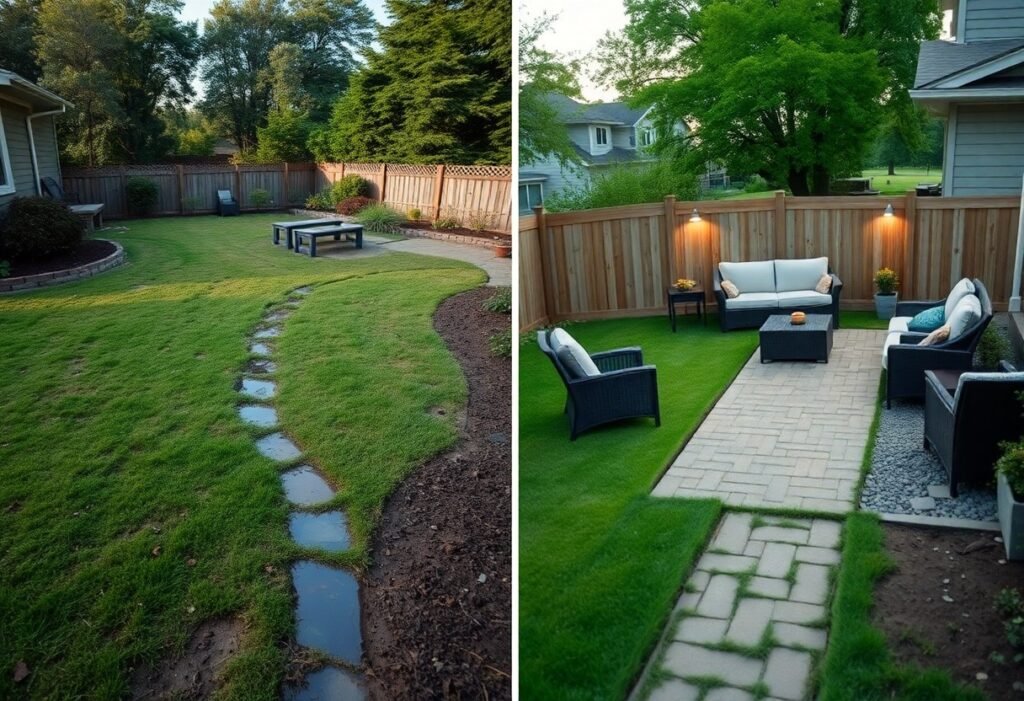
Many backyard projects begin with enthusiasm but end in disappointment due to overlooked planning errors. You might install a patio without considering sun patterns, or overcrowd planting beds with species that outgrow their space. Poor drainage, mismatched materials, and ignoring privacy needs are frequent missteps. You can avoid these pitfalls by approaching your design with clear objectives, site awareness, and long-term maintenance in mind. A well-executed backyard balances form and function, tailored to how you actually use the space.
Assessing the Site: How-to Guide for Pre-Design Analysis
Evaluating sunlight patterns and soil quality
Begin by observing how sunlight moves across your yard throughout the day. Track which areas receive full sun, partial shade, or full shade over a 24-hour period, especially during the growing season. This pattern directly influences plant selection and placement. Soil quality also plays a defining role; perform a simple texture test or send a sample to a local extension service for analysis. A mid-sized SaaS firm might rely on data, but your garden relies on dirt composition-know its pH, drainage capacity, and organic content before planting.
Factoring in drainage and existing utility lines
Water pooling after rain signals poor drainage, a problem that can undermine both plants and hardscapes. Identify low spots and note the direction water flows across the yard. Install a rain garden or French drain where needed to redirect runoff. Always call 811 before digging to locate underground utility lines-gas, electric, water, or telecom. Hitting a line risks injury, fines, and costly repairs. One homeowner in Portland damaged a gas line while installing a pergola, delaying the entire project by three weeks.
Understanding subsurface conditions prevents future complications. Compacted soil or hidden pipes can limit where patios, trees, or irrigation systems are placed. Mapping utility routes and natural water flow during the planning phase allows for smarter, safer design choices that align with physical constraints.
Defining the Layout: Critical Factors for Functional Zoning
Effective backyard design begins with intentional zoning that aligns with how you use the space. Identify primary activity areas such as dining, lounging, play, or gardening, and allocate zones accordingly. Proximity matters-keep the kitchen close to the outdoor dining spot for convenience. A mid-sized SaaS firm’s employee survey revealed that 70% of homeowners use their backyards primarily for casual gatherings, underscoring the need for social zones that feel natural and accessible.
- Map out existing features like trees, slopes, or utility lines
- Consider sun and shade patterns throughout the day
- Factor in privacy from neighbors and street views
- Ensure each zone has a clear purpose and visual identity
Knowing how your household interacts with the outdoors shapes a layout that supports real-life use, not just aesthetic ideals.
Establishing clear traffic pathways and flow
Pathways should guide movement without forcing detours or creating bottlenecks. Use durable materials like gravel, pavers, or stone to define walkways between key zones. A common error is making paths too narrow-aim for at least 18 inches for single-person routes and 36 inches where two people might walk side by side. Curved lines can slow movement and enhance visual interest, but avoid excessive bends that confuse direction.
Connect high-traffic areas like the back door, patio, and garden shed with direct, logical routes. Knowing where foot traffic naturally leads prevents worn grass and awkward detours over time.
Balancing open space with structural elements
Open lawn areas provide flexibility for play, gatherings, or future changes, but too much emptiness feels underutilized. Structures like pergolas, raised decks, or garden beds anchor the design and create visual rhythm. A small urban backyard in Portland used a 60/40 ratio of hardscape to lawn, achieving balance without crowding.
Structural elements should complement, not dominate, the available area. Knowing your yard’s dimensions and sightlines helps distribute features evenly.
One effective method is placing a central feature-such as a fire pit or specimen tree-surrounded by open ground, allowing the eye to rest while maintaining usability. This arrangement supports both activity and tranquility, especially in compact lots where every square foot counts.
Selecting Plant Life: Expert Tips for Sustainable Growth
Choosing the right plants ensures your garden thrives with minimal intervention. Match species to your soil type, sun exposure, and rainfall patterns to reduce dependency on watering and chemical support. Native plants often require less maintenance while supporting local pollinators.
- Select perennials adapted to your region’s hardiness zone
- Group plants with similar water and light needs
- Account for mature size to prevent overcrowding
- Introduce disease-resistant varieties where common pathogens exist
Perceiving long-term growth patterns helps avoid costly corrections later.
Avoiding invasive species and improper scaling
Bamboo, English ivy, and purple loosestrife can overrun gardens and nearby ecosystems. These plants spread aggressively, displacing native flora and altering soil composition. Local extension offices often publish lists of prohibited or problematic species for your area.
Scaling matters just as much. A tree planted too close to a patio may crack hardscapes within a decade. Perceiving mature dimensions prevents structural damage and excessive pruning.
Matching plant needs to local microclimates
Southern exposures in your yard may be ten degrees warmer than shaded northern corners. A microclimate near a brick wall retains heat, favoring plants like lavender or rosemary. Conversely, low-lying areas collect cold air, making them unsuitable for frost-sensitive species.
Observe temperature variances, wind tunnels, and moisture pockets throughout the seasons before finalizing placements.
Microclimates can differ significantly even within a single backyard. A mid-sized SaaS firm’s campus in Portland reduced irrigation needs by 40% simply by relocating drought-tolerant plants to sun-baked zones and moisture lovers near downspouts. Soil temperature, reflected heat, and airflow create conditions that may support or hinder growth regardless of regional planting zones. Positioning plants according to these subtle shifts improves survival and reduces maintenance. Perceiving these nuances transforms a struggling garden into a resilient, self-sustaining space.
Material Selection: How-to Choose Durable Hardscape Components
Prioritizing slip-resistance and weatherproofing
Slip-resistant surfaces prevent accidents, especially in areas exposed to rain or near pools. Textured pavers, honed stone, or stamped concrete offer grip without sacrificing aesthetics. Materials like porcelain tiles with a high coefficient of friction perform well in wet climates. Avoid polished finishes in walkways or steps where moisture accumulates.
Weatherproofing ensures longevity across seasons. In freeze-thaw regions, choose materials with low water absorption to prevent cracking. A mid-sized SaaS firm in Colorado replaced their sandstone patio after two winters due to spalling; they switched to concrete pavers rated for extreme temperatures.
Coordinating textures with the home exterior
Matching hardscape texture to your home’s façade creates visual continuity. Brick homes pair naturally with clay pavers, while modern stucco exteriors align with smooth concrete or linear stone. Contrasting coarse stone walls with fine gravel pathways can highlight transitions between house and garden.
Consider the front entry’s material flow. If your porch steps are bluestone, extend that stone into the walkway or use a complementary base like charcoal crushed granite. A beige stucco home in Austin used warm-toned travertine coping around its courtyard, tying the driveway, steps, and planter edges into a unified scheme.
Surface texture influences both light reflection and footfeel. Rough-cut stone absorbs light, lending a grounded, natural look, while finely finished concrete reflects ambient light, brightening shaded areas. Your choice affects not just appearance but sensory experience-walking barefoot on tumbled pavers feels different than on smooth slate, a detail often overlooked in early planning.
Lighting and Irrigation: Vital Factors for Longevity
Ignoring lighting and irrigation leads to underused spaces and stressed plantings, undermining even the most thoughtful designs. A mid-sized SaaS firm’s headquarters in Portland reduced landscape maintenance costs by integrating efficient systems early. Install irrigation tailored to plant needs and group species by water requirements. Layer lighting to enhance safety, extend usability, and highlight key features after dark.
- Use path lights to guide movement along walkways
- Install motion-sensor fixtures near entries
- Group plants with similar water needs in zones
- Choose drip lines over sprinklers for precision
After mapping sun exposure and drainage patterns, select system types that align with your garden’s microclimates.
Implementing automated watering systems
An automated irrigation setup conserves water while maintaining root health, especially during dry spells. Timer-based controllers adjust delivery without daily oversight, reducing runoff and overwatering risks. Pair smart sensors with weather-adaptive valves to pause cycles during rain. A suburban garden in Austin maintained lush beds throughout summer using a zoned drip network tied to a soil moisture monitor.
After installation, test each zone for coverage overlap and adjust emitter placement to avoid dry spots.
Layering light for safety and aesthetics
Effective lighting combines ambient, task, and accent elements to create depth and functionality. Low-voltage fixtures along steps prevent trips, while uplights draw attention to specimen trees or architectural details. Place path lights at consistent intervals no more than six feet apart for even guidance. A coastal property in Maine uses submerged pond lights and rail-mounted deck fixtures to extend evening use year-round.
After dark, the layered scheme reveals texture in stone walls and foliage, transforming the space without glare.
Fixtures with warm-color temperatures around 2700K blend naturally with outdoor environments, minimizing light pollution and insect attraction. Position accent lights to cast subtle shadows, enhancing dimensionality. Use shielded housings to direct beams downward, meeting dark-sky principles while illuminating surfaces safely.
Furnishing the Space: Tips for Proportional Design
Outdoor furniture should complement your yard’s dimensions, not dominate them. A mid-sized SaaS firm’s office courtyard, for example, used oversized sectional seating that crowded a modest patio, leaving little room for movement. Select pieces that allow at least 24 inches of clearance for walkways and fit within designated zones without spilling into pathways.
- Choose low-profile seating for small patios to maintain openness
- Use modular furniture to adapt to changing needs
- Leave space for side tables and movement around each piece
- Anchor groupings with a central element like a coffee table
Knowing the primary function of each zone helps determine appropriate furniture scale and arrangement.
Choosing the right scale for outdoor furniture
Large furniture in compact areas creates a cramped feel, while tiny pieces disappear in expansive yards. A dining set meant for eight overwhelms a 10×10-foot deck, just as a loveseat looks lost in a 20-foot clearing. Measure your space before purchasing and visualize how each item fits within the footprint.
Scale also affects comfort; oversized chaise lounges may look grand but can be impractical for daily use if they block access to garden beds or grilling areas.
Incorporating focal points without visual clutter
A single sculpture, fire pit, or specimen plant draws the eye and defines a seating area without overcrowding. Multiple competing features-such as a fountain, wind sculpture, bird bath, and string lights all clustered together-distract rather than delight. Limit dominant elements to one per zone to maintain visual harmony.
Even small yards benefit from a clear center of interest, like a potted olive tree centered on a stone plinth.
Position focal points where they’re visible from key vantage points, such as from the kitchen window or main seating area, ensuring they enhance rather than interrupt the flow of the space.
Final Words
Overlooking sun patterns can lead to poor plant performance and uncomfortable seating areas, so observe how light moves across your yard throughout the day before finalizing any plan. Placing a dining set in a spot that bakes in afternoon sun or planting shade-loving ferns in full exposure undermines both comfort and sustainability.
A mid-sized SaaS firm’s CEO once installed an elaborate water feature only to realize it drowned out conversation; sound dynamics matter as much as visual flow. Design with the senses in mind, not just aesthetics, and always test layouts with temporary markers before committing to permanent installations.