
Many homeowners overlook the potential of their outdoor spaces to reflect personality and warmth. You can transform a plain backyard into a distinctive retreat with thoughtful details, functional layouts, and curated elements that invite both use and admiration. The right touches turn unused terrain into an extension of your living world.
The Porch and its Proper Furnishings
Your porch functions as a threshold between home and garden, and its furnishings should reflect that duality. Choose pieces built for endurance-teak, powder-coated aluminum, or all-weather wicker-so they withstand seasonal shifts without deteriorating. A deep-seated rocking chair or a built-in bench with lumbar support invites lingering, turning brief pauses into long conversations under the eaves.
Scale matters when arranging seating; leave enough room to move freely but close enough to maintain intimacy. A low coffee table in galvanized metal or reclaimed wood offers a surface for drinks or books without dominating the space. For a mid-sized SaaS firm founder in Portland, adding a vintage-style porch swing transformed their narrow veranda into a morning retreat for tea and quiet reflection.
Illumination for the Nighttime Soul
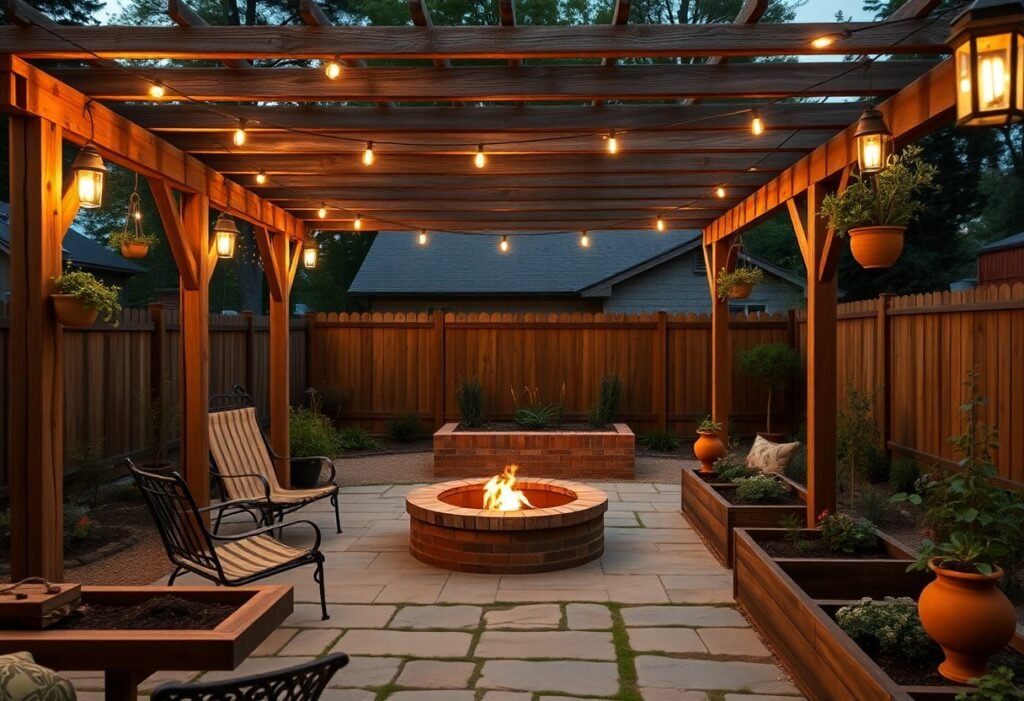
String lights draped along fence lines or pergolas create a warm, inviting glow that extends your evening use of the space. You might choose weather-resistant LED lanterns placed on side tables or tucked into planters to cast soft pools of light where you gather. Solar-powered path lights guide footsteps along winding garden routes without the need for wiring or timers.
Spotlights subtly positioned beneath tree canopies highlight architectural branches or textured bark after dark. A well-placed lamp near a reading nook or beside a hammock invites quiet moments under the stars. Consider warm-toned bulbs to maintain a natural, calming ambiance that complements the night sky rather than overpowering it.
Flora Beyond the Wild Tangle
Structured Planting for Year-Round Appeal
Shaping your greenery with purpose brings rhythm to the yard. You might group ornamental grasses in repeating clusters to create movement without chaos, or train a clematis up a latticed arch for vertical grace. A mid-sized SaaS firm’s CEO transformed her suburban plot using three types of boxwood-dwarf, standard, and globe-arranged to provide symmetry and winter structure. Evergreens anchor the borders while seasonal perennials like coneflower and Russian sage add bursts of color without overwhelming the design.
Edible Accents with Aesthetic Intent
Integrating herbs and fruiting plants into flower beds adds utility without sacrificing beauty. You can plant thyme between stepping stones where it releases scent underfoot, or grow blueberry bushes for their spring blossoms, summer fruit, and crimson fall foliage. One Brooklyn homeowner replaced a tired hedge with a row of espaliered apple trees along a south-facing fence, gaining both fruit and a living screen. The key is treating edibles as design elements, not just crops.
Water Features for Constant Company
A gently recirculating fountain introduces sound and movement that transforms a quiet corner into a focal point. You might choose a tiered ceramic design for classical charm or a sleek basalt bowl for modern simplicity. The consistent trickle masks urban noise, creating a private auditory sanctuary even in a compact city yard.
Consider a small pondless waterfall tucked beside a garden path, where water disappears into a hidden reservoir below grade. This option suits homes with young children or pets, eliminating standing water while preserving the soothing rhythm of flow. Surround the structure with moss-covered stones to enhance the sense of age and stillness.
Textiles to Soften the Ground
Outdoor rugs anchor seating areas with color and pattern while providing a finished look that mimics interior spaces. Choose weather-resistant options made from polypropylene or recycled fibers, which withstand moisture and fading without sacrificing texture. A well-placed rug defines conversation zones on patios or under pergolas, especially in spaces without built-in flooring distinctions.
Layer in floor cushions or low ottomans covered in solution-dyed acrylic fabric for flexible comfort. These materials resist mildew and UV damage, maintaining vibrancy after months outdoors. Consider a neutral base with pops of indigo or terracotta through cushion covers, easily swapped as seasons change. A mid-sized SaaS firm might rotate textiles quarterly to reflect brand campaigns, but for your backyard, let personal taste guide the palette.
Ornaments of Personal History
Objects you’ve carried through life lend authenticity to your outdoor space. A weathered garden bell from a family estate, a ceramic planter picked up on a coastal trip, or a repurposed tool from an old farmstead-each tells a quiet story when placed among greenery. These are not mere decorations but markers of time and place, grounding your yard in something real.
Curate with intention, not excess. A single vintage suitcase stacked near a bench invites curiosity, while a collection of hand-blown glass orbs in a stone niche catches light like old memories. A mid-sized SaaS firm founder once anchored her patio with a salvaged library card catalog, using its drawers to store gardening gloves and seeds-an ode to her first job and a functional heirloom.
Summing up
You bring character to your backyard not through grand gestures but thoughtful details that reflect your habits and history. A weathered bench placed beneath an oak, string lights looped between posts for evening clarity, or a collection of clay pots arranged by size all signal intention. These choices transform open space into a place with memory and mood.
Your outdoor rooms thrive when they balance utility with personality. A repurposed fountain murmurs beside a stone path, while cushions in faded indigo add warmth to wrought iron frames. Even a simple clothesline, when left up as a subtle line across the lawn, becomes part of the design. These elements work together not because they match, but because they belong.